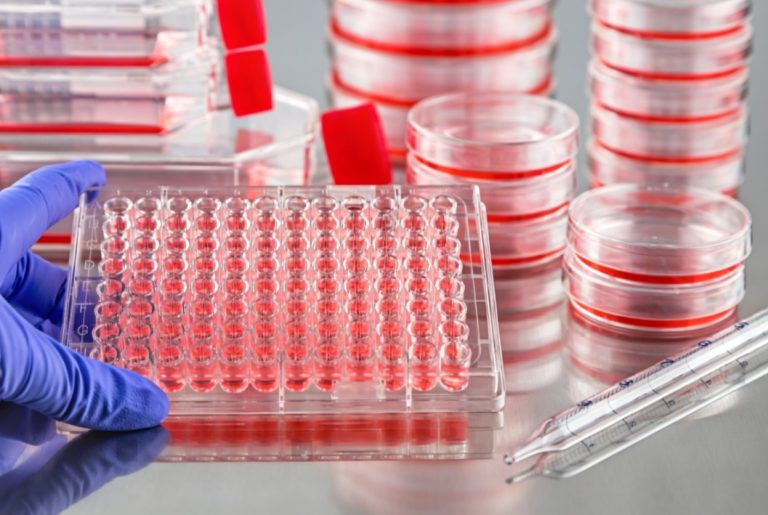
A tissue culture flask is a vessel used to grow cells in vitro (outside of a living organism). It provides an enclosed, sterile environment for cells to grow in a nutrient-culture medium. The main purposes of a tissue culture flask are:
– To provide an optimal surface for cell attachment and growth. The flask surface is treated to enable cells to adhere and proliferate.
– To allow gas exchange. Flasks are made of plastic which is permeable to oxygen and carbon dioxide to maintain ideal growth conditions.
– To contain a suitable volume of culture medium to supply cells with nutrients and maintain appropriate pH. Flasks come in different sizes based on intended cell yield.
– To enable cell expansion through subculture. Once cells reach confluence, they can be detached from the flask surface and transferred to new flasks for continued growth.
– To maintain sterility. Flasks have tight-fitting, vented lids to prevent contamination while allowing gas exchange.
– To allow viewing under a microscope. Flasks are optically clear to observe cell morphology and confluence.
– To enable the treatment of cells with compounds. Flasks allow adding/removing media and reagents to expose cells to experimental conditions.
So in summary, the tissue culture flask provides an optimized vessel for growing cells, manipulating their environment, expanding their numbers, and performing analytical procedures outside of a living organism.