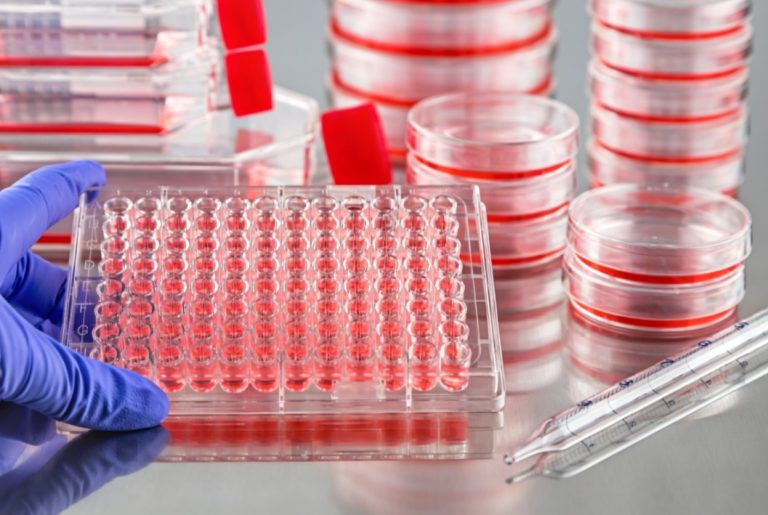

Scaling cell lines in a steady way needs careful choice of vessels, steady conditions, and good lab supplies. Puretest works as a trusted global laboratory consumables supplier and leading cell culture flask manufacturer. The company offers strong TC-treated T25, T75, and T175 cell culture flask options built for even cell sticking, steady growth, and smooth steps when expanding work.
Growing from Seeding to Expansion
Moving cells from small thaw cultures to bigger production runs calls for attention to surface area, gas flow, and when to split during every cell expansion workflow.
The Importance of Vessel Selection in Cell Line Expansion
Good cell culture flask selection affects how well cells live, their shape, and how they handle food. Going through different growth stages means matching the amount of liquid and surface space to cell numbers with the right tissue culture flask:
- Primary Seeding: Smaller vessels like the T25 cell culture flask cut stress on fresh thawed cells that still feel delicate.
- Mid-Scale Propagation: Medium vessels such as the T75 cell culture flask allow quick growth without too much thinning of the culture.
- Production Harvesting: Big options like the T175 cell culture flask give higher numbers for later tests, storage, or making products.
Why Puretest Labware Ensures Consistent Experimental Results
Made in clean rooms under ISO13485 rules, Puretest acts as a reliable sterile cell culture flask supplier. The labware removes differences from one batch to another.
- Vacuum Gas Plasma TC Treatment: This makes a steady water-loving surface on each tissue culture flask so cells attach well.
- Sterile Vent Caps: These have 0.22 µm filters that let gas move but keep germs out.
- Custom & OEM Capabilities: Flexible OEM cell culture products made for particular research and factory needs.
Growth Area & Media Volume Comparison Table (T25, T75, T175)
Knowing the sizes and volumes for each T25, T75, and T175 cell culture flask stops you from putting too few cells or running out of food during cell culture scale-up.

Technical Parameters Across Flask Sizes
The numbers below show main working details for usual attached cell lines at normal seeding levels (2 × 10⁴ to 4 × 10⁴ cells per cm²).
| Parameter | T25 Cell Culture Flask | T75 Cell Culture Flask | T175 Cell Culture Flask |
| Growth Area | 25 cm² | 75 cm² | 175 cm² |
| Recommended Media Volume | 5 mL – 7.5 mL | 15 mL – 22.5 mL | 35 mL – 52.5 mL |
| Average Cell Yield at 80% Confluency | ~ 2.5 × 10^6 cells | ~ 7.5 × 10^6 cells | ~ 1.75 × 10^7 cells |
| Primary Application Target | Thawing, initial seeding, pilot testing | Routine passage, bio-assays | High-density expansion, cell banking |
When to Passage: Confluency Benchmarks for Each Flask Size
Splitting cells at the right time avoids crowding, aging, and food shortages. This keeps cells stable through many splits during your cell expansion workflow.

Identifying Optimal Confluency Across Scaling Phases
Watching cell numbers makes sure splitting happens in the fast growth time before they slow down.
- 70%–80% Confluency Benchmark: This works as the best time to split most attached lines like HeLa, HEK293, or CHO so they attach again fast and recover well.
- Over-Confluency Risks (>90%): Cells pack too tight and become hard to separate with enzymes, leading to fewer live cells.
- Under-Confluency Stress (<50% during passaging): This causes slower starts because growth signals from nearby cells spread too thin.
Step-by-Step Scaling Recommendations
Going from a T25 cell culture flask to a T175 cell culture flask in your cell culture scale-up needs planned split ratios to keep fast growth.
- Step 1: Thaw into T25 Flask: Put new thawed cells into a T25 cell culture flask with 5 mL warm media to check they live and start growing.
- Step 2: Expand to T75 Flask: When the T25 reaches 80 percent full, split at 1:3 into a T75 cell culture flask with 15 mL media.
- Step 3: Scale to T175 Flask: Split 1:2 or 1:3 from the T75 into a T175 cell culture flask with 45 mL media for big production.
Puretest Advantage: Ergonomic Design, Clear Graduations, and Leak-Proof Seals
As an experienced cell culture flask manufacturer, Puretest builds useful labware that fixes daily problems in cell culture work.
Precision Engineering for Contamination-Free Workflows
Puretest T25, T75, and T175 cell culture flask models deal with usual lab troubles like leaking caps, germ spread, and wrong liquid amounts.
- Angled Neck Design: This helps pipettes and scrapers reach inside easily, cuts hand tiredness, and stops spills.
- High-Clarity Graduations: Marks on both sides let you check media amounts accurately when changing liquids.
- Leak-Proof Vent & Plug Caps: Tight threads and good seals stop leaks during moving and keep right CO₂ levels in incubators.
- Non-Pyrogenic & DNase/RNase Free: Free of harmful endotoxins to protect stem cells, primary cells, and test cultures.

Diverse Application Scenarios in Modern Labs
Standard items from a trusted laboratory consumables supplier fix certain work issues in factories, clinics, and school labs.
- Primary Cell Isolation and Culture: In stem cell studies, good cell culture flask selection with treated T25 flasks lowers early attachment loss and raises success from small tissue samples.
- Biopharmaceutical Scale-Up: In antibody making, moving from a T75 cell culture flask to a T175 cell culture flask builds steady starter cultures for bigger tanks and keeps cell numbers even.
- Routine Quality Control Assays: Research groups use standard tissue culture flask choices to keep cell layers steady for toxicity tests and cut differences between runs.
Streamline Your Cell Expansion Workflows with Puretest
Ready to make your cell expansion workflow better with steady high-yield vessels? As a leading sterile cell culture flask supplier, Puretest offers bulk buy choices, free test samples, and custom OEM cell culture products for your lab needs.
Contact Puretest today to request a customized quote or sample kit for your laboratory!
FAQ
Q: How do I determine the correct working volume of media for T25, T75, and T175 flasks?
A: A standard guideline for cell culture flask selection is to use 0.2 mL to 0.3 mL of culture media per square centimeter of growth area. This gives about 5 mL for a T25 cell culture flask, 15 mL for a T75 cell culture flask, and 45 mL for a T175 cell culture flask.
Q: What is the main difference between vent caps and plug seal caps on cell culture flasks?
A: Vent caps have a 0.22 µm filter that lets sterile gas move in CO₂ incubators. Plug seal caps need partial opening for gas or full closure for sealed systems.
Q: Why is TC treatment necessary for adherent cell lines?
A: Tissue Culture treatment uses gas plasma to change the plastic surface so cell attachment proteins can stick well.
Q: Can T175 flasks be used directly for thawing frozen cell stocks?
A: It works better to thaw cells into a smaller tissue culture flask like a T25 cell culture flask. This keeps growth signals strong and helps cells recover faster before a full cell culture scale-up to a T175 cell culture flask.