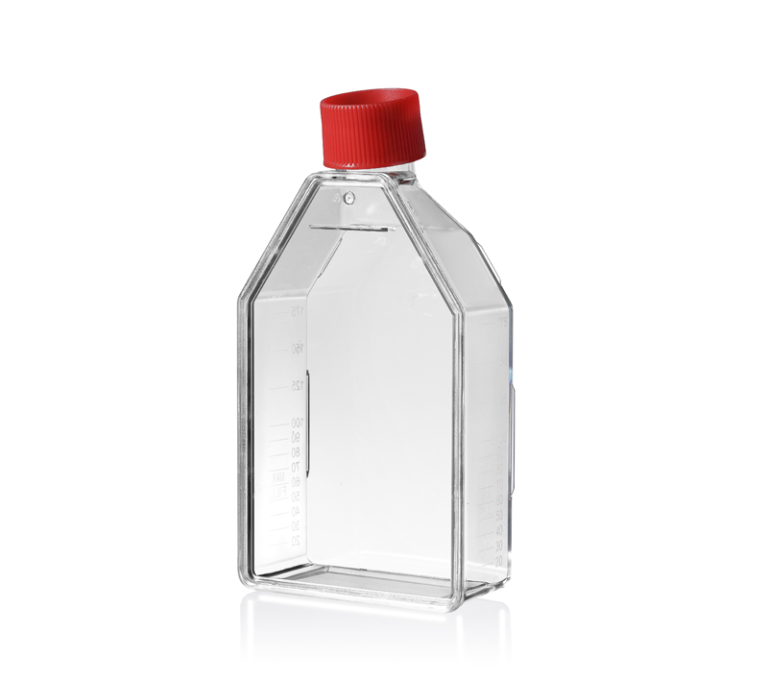
Choosing the right cell culture flask size is a function of how much surface area a culture needs to grow, how frequently a culture will need to be passed, and how easily a flask can be moved around in the incubator. The T25, T75, and T175 flasks listed by Puretest as TC-treated, sterile flasks with 0.2 micron vent cap respectively, represent different trade-offs between providing room for cultures to expand, using the minimum amount of medium, minimizing the amount of space that they take up on the incubator shelves, and facilitating easy handling.
Why Cell Culture Flask Size Matters
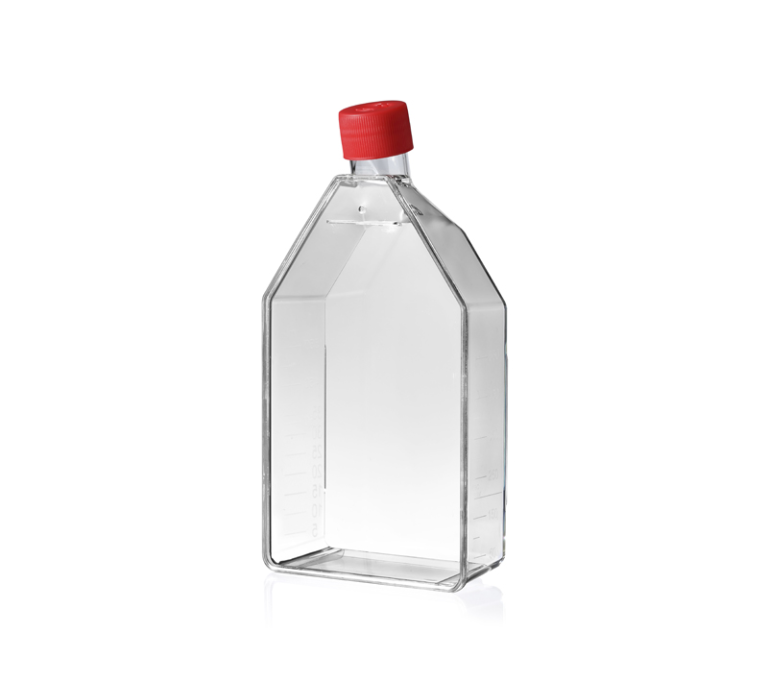
The choice of cell culture flasks can influence the tempo of your experiments. Small flasks are suitable for initial experiments using only a few cells. Larger flasks give growing cultures more space until they can be transferred to the next stage of the experiment. Choosing a flask by size alone can lead to unnecessary handling and should be based on the current culture stage and the intended next step.
In selecting cell culture vessels for lab use, four main criteria need to be considered: the required growth area and expected passage time; the amount of available space in the incubators; the ability to handle the vessels without disturbing the cultures; and the design of the medium plan and the cap of the flask, which will remain in the controlled environment of the lab for extended periods of time.
Growth Area and Expansion Planning
The sizes T25, T75 and T175 are part of a growing family of shake flasks that can be organized in order of increasing size for the expansion of cultured cells in larger vessels as needed. The choice of the appropriate flask will depend on the number of cells that are available, the desired cell density and the next step in the work flow. A larger vessel does not automatically mean better, especially when the culture is in an early stage of development or when space in the incubator is limited.
Handling Frequency and Incubator Space
Choose flasks that match your team’s lifestyle. A T25 is easily labeled, inspected, and moved during initial optimization. A T75 provides a good middle ground for regular expansion. A T175 is useful for very large cultures but requires extra space and a careful handling routine that keeps the vessel from tipping during feeding and passaging.
T25 Cell Culture Flask
Best Fit for Small-Scale Work
For initial experiments with limited numbers of cells, for optimization of protocols that use only a small growth area or for initial set up of several small conditions that are to be kept separate in the lab for some time, a T25 cell culture flask is often the most sensible first choice. The small size of the flask makes easy observation and first passage planning possible.
The T25 format should still be selected with the surface treatment and cap design in mind. Puretest lists the T25 as a TC-treated, sterile flask with a 0.2 micron vent cap, but the culture protocol should determine whether that configuration fits the intended cell type, medium, incubator, and handling schedule.
Early-Stage Culture and Optimization
T25 flasks can be very useful for tasks that require a lot of observation before a decision can be made. With T25 flasks, one can test out many conditions with only a small amount of medium and then transfer the best condition to a bigger flask when it needs more room for growth. This allows one to keep early work focused and prevents excessive use of medium and space in the incubator.
T75 Cell Culture Flask
Balanced Capacity for Routine Expansion
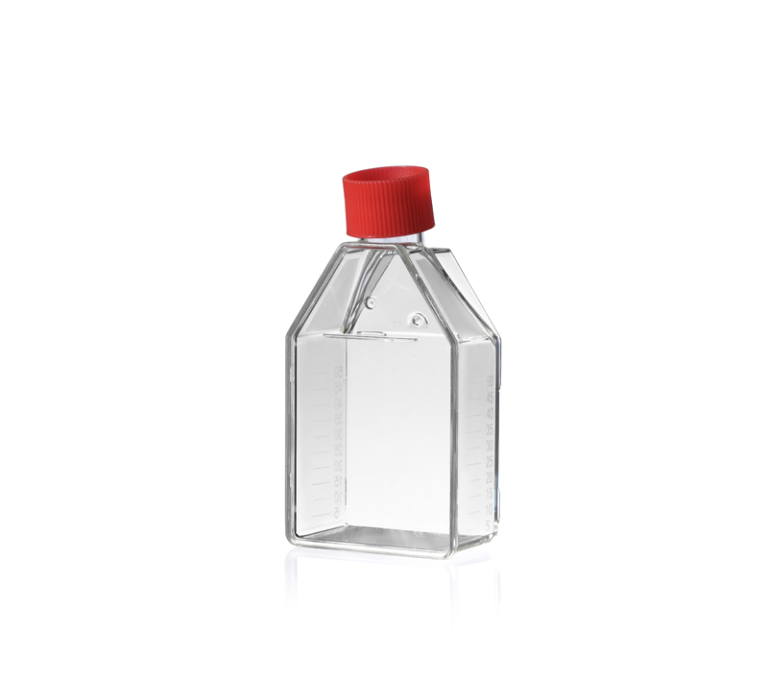
A T75 cell culture flask is generally considered to be in the middle ground of our range of flasks. It provides more space than a T25 flask for cells to grow in but is not as large as a T175 flask. Thus the T75 is very suitable for routine transfer of cultures, for regular passing of cells and for other applications where cultures are allowed to grow for some time between handling. A T75 flask is also very useful when one wants to use a particular flask size for most stages of culture for a particular experiment to keep things simple.
Deciding to keep cells in a T75 flask should be linked to the next planned passaging, rather than becoming a default decision. Will the cells be split between several new vessels, transferred to a bigger flask, or put straight into an assay after the next readout? Linking the choice of flask to the rest of the workflow for that day, rather than just the current day’s cell density, is more useful.
Imaging and Passaging Workflows
For cultures that need to be checked on a regular basis, the most practical flask would be one that can be placed, viewed and removed with minimum disruption to your normal work. A T75 flask would provide a good working compromise for such a schedule. The laboratory should also attempt to standardize items such as labeling, flask orientation, cap handling etc. and the amount of time a flask is allowed out of the incubator.
T175 Cell Culture Flask
Supporting Larger-Scale Expansion
A T175 cell culture flask is best used for larger expansion needs of your cultures before the next split or application. Rather than splitting your already growing culture into multiple smaller flasks, you can allow it to grow to the larger size of a T175 before transferring it. These flasks do require some planning for the placement of your incubator, for the handling of medium, for labeling, etc. and movement within your work area.
Adding a larger flask to the workflow only makes sense if it actually improves the workflow. Before choosing a larger flask, check whether your incubator can hold the new vessel comfortably and whether the chosen handling mode will protect your culture adequately when feeding, inspecting or passing it on.
Planning Space, Medium, and Handling
Before selecting T175, map the full path from seeding to the next use. Estimate how many vessels can be positioned safely, how the medium will be added or removed, and how the vessel will be identified during repeated handling. This planning is especially important when multiple conditions share one incubator and the vessels need to remain easy to distinguish.
Surface Treatment and Vent Cap Selection
Why TC-Treated Surfaces Matter
Surface treatment of the culture surface is a culture decision, especially for adherent cell cultures. In Puretest, the T25, T75 and T175 flasks are identified as TC-treated. This information can be important for choosing culture vessels but in the end one surface does not suit all purposes and cells have to be matched with the appropriate vessel, with coatings as necessary, growth medium and with the correct protocol.
The Role of a 0.2 Micron Vent Cap
A vent cap is used when your culture setup requires controlled gas exchange while the flask remains closed for your incubation. 0.2 micron vent caps are offered for all three formats on Puretest. Follow the protocol for use with your specific setup, in the specified incubator, and be very careful with the cap when moving the flask and adding foods.
Another important selection criterion is sterility. Puretest lists the following products as being sterile: T25, T75, and T175 culture vessels. The sterility marking does not necessarily mean that the items can be opened in an inappropriate manner in the lab, so the selection of culture vessels has to be combined with considerations regarding the flask format, storage, opening, and the appropriate lab workspace.
Choosing Cell Culture Flasks from Puretest
We supply Puretest cell culture flasks in three different sizes: T25, T75 and T175. Based on the stage of the cultures, it is possible to work in a clear structured manner: T25 for small and for preliminary tests, T75 for balanced routine work, and T175 for further growth in larger volume, if the workflow in the incubator allows it. Important to check: surface treatment, vent cap, sterility, and the handling.
The Puretest range of cell culture flasks is compared on the Puretest cell culture flasks page and the full range of Puretest cell culture products on the cell culture products page, enabling comparison of vessel types and key product information to facilitate a culture method that can be repeated accurately.
Conclusion
Cell culture flasks are selected based on the requirements of the user’s workflow. T25, T75 and T175 flasks are offered by Puretest and each of these sizes has distinct characteristics which need to be matched with the culture stage, growth area required, passage strategy, available space in the incubator, surface finish, cap type and method of handling etc.
When requiring a consistent size increase for small numbers of cells to be scaled up in culture for larger numbers, the following Puretest flasks can be used as a starting point to compare.
FAQ
Q: What is the difference between T25, T75, and T175 flasks?
A: The three different cultures sizes provided here support different stages of cell expansion. The T25 flasks are suited for the small number of cells from an early passage and support the user through the initial stages of work. The T75 flasks provide a balanced routine for further expansion of the cells. The T175 flasks support a larger expansion of the cells.
Q: When should a laboratory choose a T75 cell culture flask?
A: A T75 flask can be useful if a T25 is too small for routine passages but a T175 is too large to fit into the available space for the subsequent steps of your culture protocol. Most repeatable steps, regular passaging and cultures that need more space between observations are suited for a T75 flask. The choice of flask should be based on the culture plan and the next passage, not on personal preference for larger flasks.
Q: Are TC-treated flasks suitable for every cell type?
A: TC-treated surfaces are of relevance to many adherent-cell-based applications. However, it would be misguided to consider one surface type as the optimal vessel for all applications. In addition to the cell biology, the coating required, the growth medium, and the culture conditions all need to be taken into account when selecting a suitable vessel. The relevant Puretest surface types are listed for the T25, T75, and T175 flasks as TC-treated.
Q: What should be checked when selecting a vented cell culture flask?
A: Check the flask format, growth area requirement, surface treatment, cap type, vent specification, sterility marking, and the handling routine used in the incubator. Puretest lists a 0.2 micron vent cap on the T25, T75, and T175 formats. The laboratory should still confirm that the configuration matches its protocol and aseptic workflow.