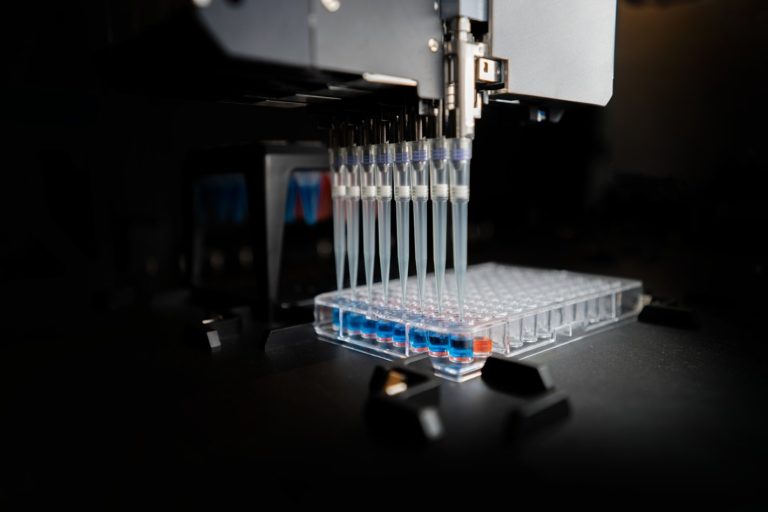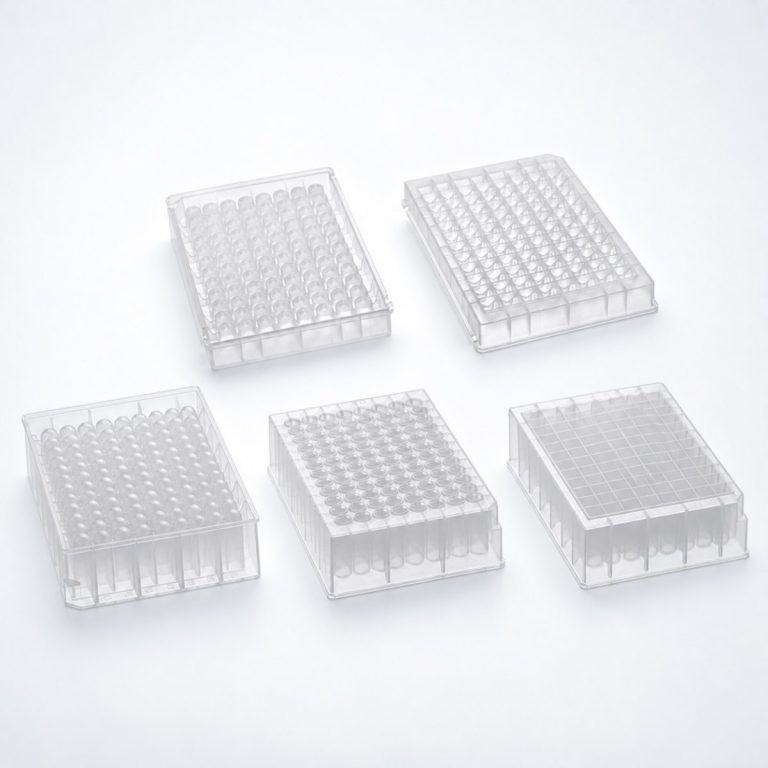
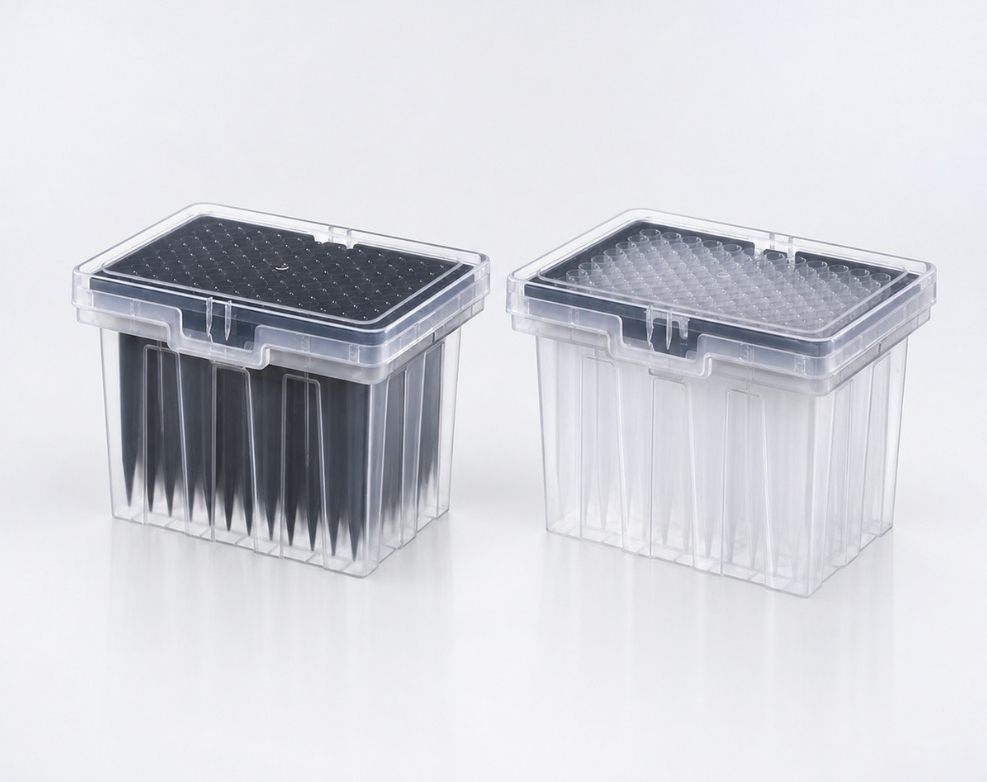
In automated high-throughput screening and biobanking, liquid handling accuracy depends heavily on the physical interface between the instrument mandrel and disposable tip. When comparing Hamilton vs Tecan pipette tips, even minor dimensional variation can cause tip dropouts, liquid level detection failures, or well-wall contact errors in high-density plates.
- High-throughput laboratories can experience reagent dripping, air-gap leakage, and tip misalignment when pipette tip dimensional accuracy is insufficient.
- Selecting the correct automated liquid handling tips requires a clear understanding of tip cone geometry, sealing interfaces, conductive materials, and robotic pipette tip compatibility.
- Achieving reproducible dispensing across 96-channel or 384-channel heads requires tight pipette tip tolerances, strong channel-to-channel consistency, and rigorous quality control.
To address these requirements, Puretest provides robotic tip solutions designed for automated liquid handling platforms, including Hamilton-compatible pipette tips and Tecan-compatible pipette tips.
Architectural and Design Discrepancies in Automated Liquid Handling Tips
Understanding the mechanical differences between Hamilton robotic pipette tips and Tecan robotic pipette tips is essential when evaluating Hamilton vs Tecan pipette tips. Differences in sealing interfaces, collar design, conductivity, and tip cone geometry determine how each tip interacts with its respective liquid handling system.
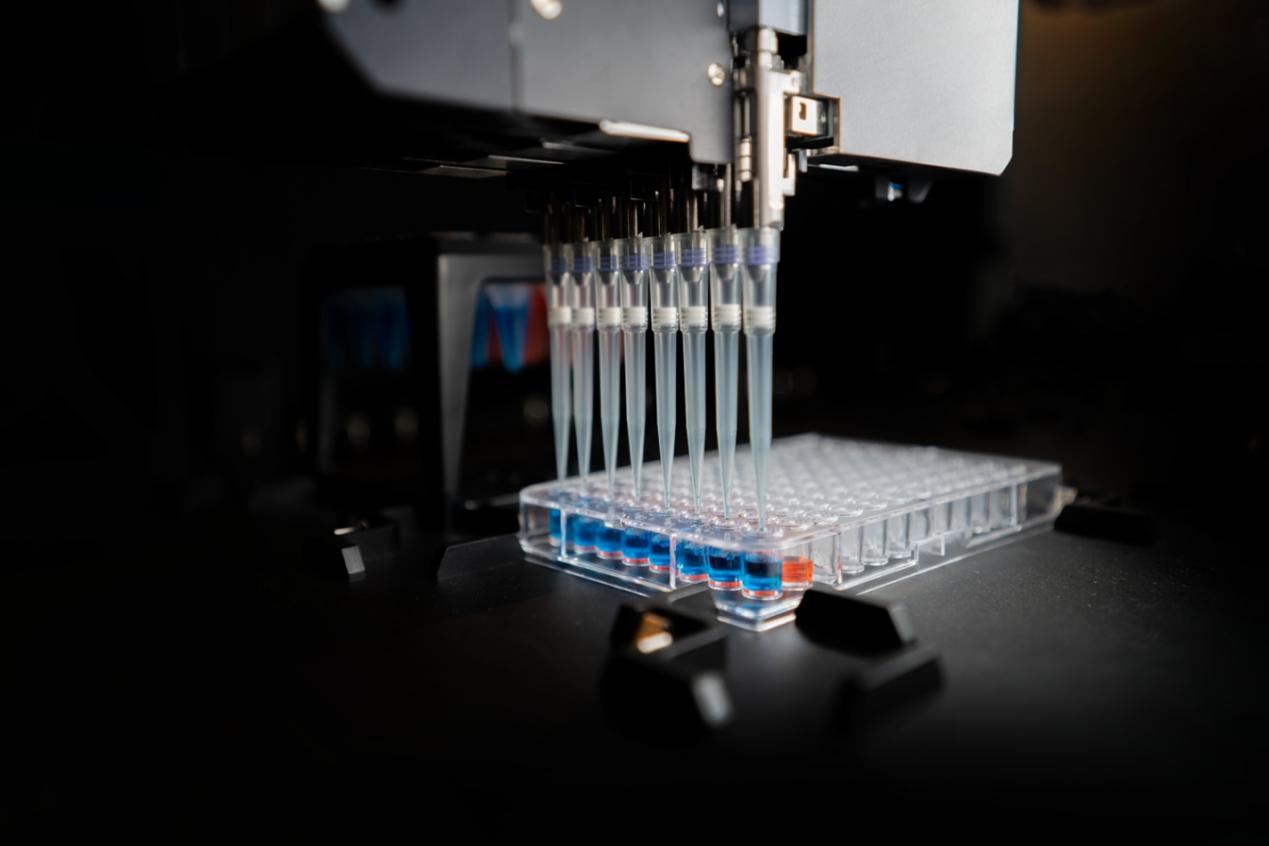
Tip Cone Geometry and Sealing Mechanisms
The structural design of the sealing zone directly influences mounting force, sealing performance, and tip pickup reliability.
Hamilton CO-RE Technology Interface: Hamilton robotic pipette tips use a specialized collar geometry designed for Hamilton CO-RE mounting channels, requiring precise control of the upper sealing interface.
- Tecan LiHa Friction-Fit Interface: Tecan robotic pipette tips use a conical friction-fit interface that must match the instrument mandrel closely to create a reliable seal.
- Sealing Zone Polish: Smooth internal sealing surfaces help reduce micro-leakage during sensitive liquid transfer.
Because of these different interfaces, robotic pipette tip compatibility depends on system-specific geometry rather than tip volume alone.
Liquid Level Sensing and Conductive Carbon Engineering
Capacitive liquid level detection requires controlled conductive material properties and consistent tip construction.
- Carbon Polypropylene Blending: Conductive tips incorporate carbon-modified polypropylene to support liquid level sensing.
- Capacitive LLD Sensitivity: Rapid signal response allows automated channels to detect the liquid surface and control immersion depth.
- Clear Non-Conductive Alternatives: Transparent medical-grade polypropylene tips support workflows where conductive sensing is not required.
Dimensional Accuracy, Tolerances, and Tip Pickup Reliability
Robotic liquid handlers demand strict pipette tip tolerances to reduce ejection failures and spatial misalignment. Maintaining pipette tip dimensional accuracy is especially important for simultaneous multi-channel pickup and high-density plate access.

Tight Tolerances and Positional Accuracy Metrics
Precise tip geometry helps ensure that tips enter wells correctly without contacting sidewalls.
- Concentricity Controls: Tight straightness control supports accurate positioning during deep-well and microplate access.
- Orifice Uniformity: Consistent tip-orifice dimensions help support repeatable droplet formation and aspiration behavior.
- Z-Axis Positional Precision: Uniform tip length improves channel-to-channel consistency by keeping immersion depth similar across multi-channel heads.
Reliable pipette tip dimensional accuracy therefore supports both fluidic performance and mechanical positioning.
Channel-to-Channel Consistency and Full-Head Qualification
High-throughput systems require uniform performance across all channels to reduce assay variation.
- Volumetric Consistency: Precision molding helps maintain repeatable aspiration and dispensing behavior across tips.
- Full-Head Qualification: Full-head qualification evaluates whether complete 96- or 384-tip arrays mount evenly during simultaneous pickup.
- Tip Pickup Reliability: Stable rim geometry and rack positioning improve tip pickup reliability and reduce dropped-tip events during unattended workflows.
For high-density automated systems, channel-to-channel consistency, full-head qualification, and tip pickup reliability should be evaluated together.
Precision Robotic Tip Solutions from Puretest
Puretest develops Hamilton-compatible pipette tips and Tecan-compatible pipette tips for high-throughput laboratory workflows. These automated liquid handling tips are designed around platform-specific mounting geometry, rack format, and fluid-handling requirements.
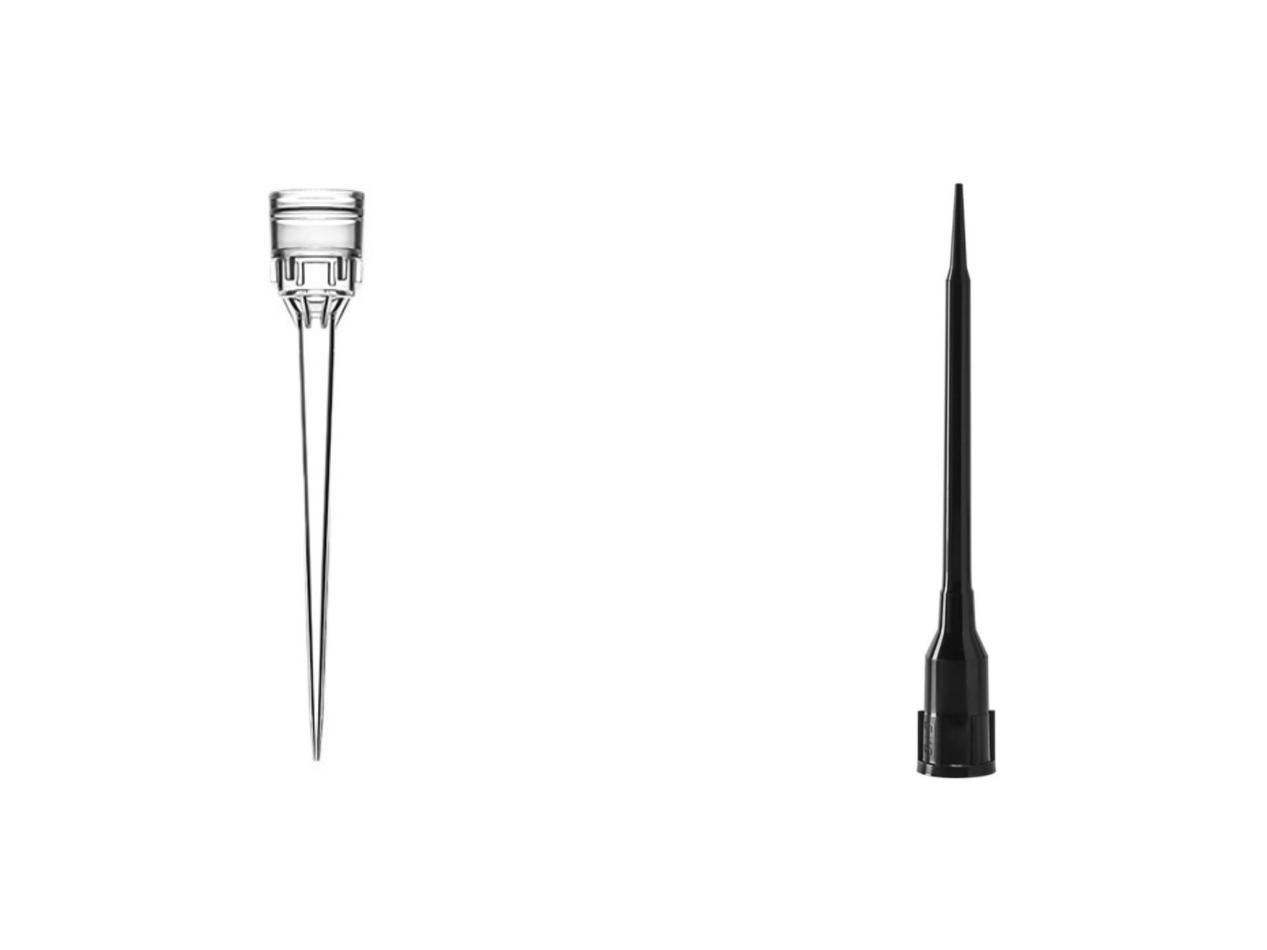
Puretest Hamilton-Compatible Conductive Robotic Tips
Puretest Hamilton-compatible pipette tips are designed for Hamilton automated liquid handling platforms requiring precise CO-RE-style mounting geometry.
- Precision CO-RE Collar: Controlled collar dimensions support secure automatic pickup and release.
- Mirror-Polished Low Retention: Smooth internal surfaces help reduce liquid retention during sensitive sample transfer.
- Application Scenarios: Suitable for genomic DNA extraction, magnetic bead purification, biobanking, and other automated workflows.
- Packaging Rigidity: 96-tip rack formats help maintain stable positioning and pipette tip rack compatibility during robotic deck handling.
Puretest Tecan-Compatible Conductive and MCA 384 Tips
Puretest Tecan-compatible pipette tips are designed for Tecan liquid handling platforms, including applications using high-density multichannel heads.
- MCA 384 High-Density Compatibility: Tecan MCA 384 tips require tight dimensional control to align correctly across 384-channel heads.
- Clean Manufacturing: Controlled production environments help support molecular biology and screening workflows.
- Application Scenarios: Tecan robotic pipette tips are used in drug screening, cell culture media handling, ELISA, and qPCR workflows.
- Problem Solved: Stable conductive performance and precise geometry help reduce dripping, signal noise, and pickup errors.
Cross-Compatibility Realities and Best Practices in the Laboratory
Evaluating robotic pipette tip compatibility requires more than comparing nominal volume. Buyers should examine tip cone geometry, instrument mounting method, rack dimensions, conductive behavior, and validated liquid classes.

Deck Setup and Pipette Tip Rack Compatibility
Automated deck systems depend on accurate pipette tip rack compatibility for transport, positioning, and tip pickup.
- ANSI/SLAS Format Racks: Standardized rack footprints help support integration with robotic deck carriers and stackers.
- Deck Gripper Stability: Reinforced rack walls reduce flexing during automated movement.
- Anti-Static Rack Design: Suitable rack materials can help limit electrostatic effects that may disturb tip orientation.
When comparing Hamilton vs Tecan pipette tips, the rack interface must be checked separately from the disposable tip itself.
Mitigating Air Gap Errors and Volumetric Drift
Matching tip geometry with instrument settings is essential for reliable transfer accuracy.
- Liquid Class Optimization: Aspiration speed, dispensing speed, and air-gap settings may require adjustment for alternative tips.
- Aerosol Filter Protection: Hydrophobic filters can help reduce aerosol contamination without restricting airflow.
- In-Lab Validation Protocols: Gravimetric or photometric testing can verify robotic pipette tip compatibility, dispensing accuracy, and channel-to-channel consistency before routine use.
Streamline Your Automated Operations with Puretest
High-throughput automation depends on consistent consumable performance. Puretest supports laboratories with Hamilton-compatible pipette tips, Tecan-compatible pipette tips, Tecan MCA 384 tips, and other automated liquid handling tips engineered for stable fit and repeatable operation.
- Request Validation Kits: Evaluate tip pickup reliability, sealing performance, and pipette tip rack compatibility directly on your Hamilton or Tecan workstation.
- Explore OEM Customization: Contact Puretest for custom rack configurations, bulk supply, and robotic tip solutions tailored to different automated platforms.
FAQ
Q: Are Hamilton and Tecan robotic pipette tips physically interchangeable between instruments?
A: Not generally. Hamilton robotic pipette tips and Tecan robotic pipette tips use different mounting interfaces, so robotic pipette tip compatibility depends on platform-specific collar and tip cone geometry.
Q: Why are pipette tip tolerances important for automated liquid handling tips?
A: Tight pipette tip tolerances support reliable sealing, positioning, and pipette tip dimensional accuracy, which becomes especially important in 96- and 384-channel automated workflows.
Q: What should be checked when validating Tecan MCA 384 tips?
A: Tecan MCA 384 tips should be evaluated for rack alignment, pickup force, dimensional consistency, dispensing performance, channel-to-channel consistency, and full-head qualification across the complete 384-tip array.
Q: Why is full-head qualification important for robotic pipette tips?
A: Full-head qualification confirms that all tips in a multi-channel array mount consistently. This helps improve tip pickup reliability, reduce dropped tips, and support repeatable liquid transfer across automated high-throughput workflows.