
Introduction
Automated liquid handling platforms have transformed modern biopharmaceutical research by increasing throughput and operational consistency. However, lab managers frequently face a critical question regarding consumable selection: are universal pipette tips truly safe for high-precision robotic workstations?
The answer depends on verified robotic pipette tip compatibility. For demanding automation, pipette tips for liquid handling robots must provide consistent mechanical fit, sealing, pickup, ejection, and volumetric performance across every channel.
The Hidden Risks of Universal Pipette Tips in Automation
While generic universal pipette tips are often marketed as cost-effective options, their use as automated liquid handling tips can create several operational risks:
- Mechanical Misalignment: Dimensional variation at the tip-cone interface can cause channel jamming, incomplete pickup, or tip crashes during automated routines.
- Volume Inaccuracy: Changes in internal geometry or poor pipette tip sealing performance can compromise vacuum stability, causing dripping, sample loss, and elevated CV% values.
- Cross-Contamination: Poor tip straightness can cause target displacement in 384-well plates, resulting in off-center dispensing and cross-well contamination.
- System Wear and Tear: Excessive force required to load poorly matched universal pipette tips can accelerate mechanical wear on liquid handling mandrels.
As a dedicated manufacturer of biopharmaceutical consumables, Puretest develops tailored solutions—including blood collection tubes, cell culture products, PCR series, and high-precision robotic pipette tips—designed for automated workflows.
What the Data Says: Key Evaluation Metrics for Robotic Pipette Tip Compatibility
To determine whether generic tips are suitable, pipette tip compatibility testing should evaluate mechanical fit, sealing, volumetric performance, and reliability under repetitive automated operation.
Physical Interface and Tip Pickup Reliability
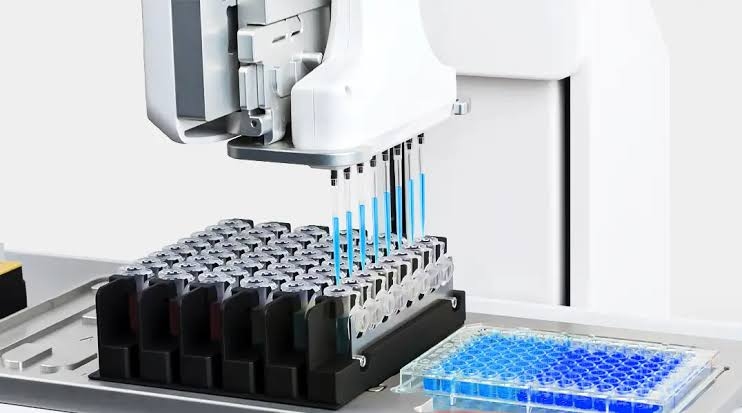
Physical compatibility between the robotic mandrel and the tip barrel directly influences tip pickup reliability, sealing, and ejection during high-throughput liquid handling.
- Tip Pickup Reliability: Comparative testing shows why tip pickup reliability should be evaluated across thousands of repeated pick-and-eject cycles rather than judged from a single successful loading event.
- Tip-Cone Interface Sealing: The tip-cone interface must form a stable seal to maintain aspiration pressure. Poor pipette tip sealing performance can result in air leakage and volumetric drift.
- Tip Ejection Reliability: Consistent flange geometry is critical for tip ejection reliability, preventing stuck tips and unexpected program interruptions.
- Concentricity & Straightness: Straight, concentric robotic pipette tips reduce the risk of well-wall contact and positional errors in dense 96- and 384-well plate formats.
These factors should form the foundation of any robotic pipette tip compatibility assessment.
Pipetting Accuracy, Precision, and Channel-to-Channel Consistency
Volumetric performance directly influences assay reproducibility and experimental data integrity across automated multi-channel systems.
- Pipetting Accuracy: Pipetting accuracy depends on internal tip geometry, sealing quality, liquid properties, aspiration speed, and correct calibration with the robotic platform.
- Pipetting Precision: Stable pipetting precision requires repeatable liquid uptake and dispensing across hundreds or thousands of cycles.
- Channel-to-Channel Consistency: In 96- or 384-channel systems, strong channel-to-channel consistency ensures each channel delivers comparable liquid volumes across an entire plate.
- Liquid Level Sensing (LLS): Conductive automated liquid handling tips require stable material conductivity to support reliable capacitive liquid-level detection.
A proper full-head qualification should therefore evaluate pipetting accuracy, pipetting precision, sealing, pickup, ejection, and channel-to-channel consistency across the complete robotic head.
Practical Applications: Solving Critical Automation Bottlenecks
Precision robotic pipette tips help resolve workflow challenges in laboratories where throughput, low-volume accuracy, and contamination control are critical.

High-Throughput Genomics and NGS Library Preparation
Next-Generation Sequencing workflows require reliable pipette tips for liquid handling robots to minimize reagent loss and maintain precise small-volume transfers.
- Where It Is Used: Automated nucleic acid extraction and NGS library preparation on platforms such as Tecan, Agilent, and PerkinElmer.
- Problems Solved: Low-retention robotic pipette tips reduce reagent hold-up during magnetic bead cleanups and help prevent unstable aspiration during enzymatic reactions.
- Performance Priority: Strong pipetting precision and pipette tip sealing performance are particularly important when working with expensive reagents at low volumes.
High-Volume Immunoassays and Cell Culture Automation
Bioprocess screening and immunoassay workflows rely on contamination control, reliable sensing, and consistent multi-channel dispensing.
- Where It Is Used: High-throughput cell culture feeding, compound reformatting, ELISA workflows, and primary screening.
- Problems Solved: Filtered and conductive automated liquid handling tips help reduce aerosol-related contamination risks and support reliable liquid-level sensing.
- Qualification Priority: Full-head qualification verifies that all channels maintain acceptable channel-to-channel consistency before routine production use.
Puretest Precision Robotic Tips: Engineered for Automated Excellence
Puretest provides specialized robotic pipette tips designed for automated liquid handling platforms where dimensional consistency and reliable mechanical interaction are critical.
Puretest Carbon-Conductive Automated Tips
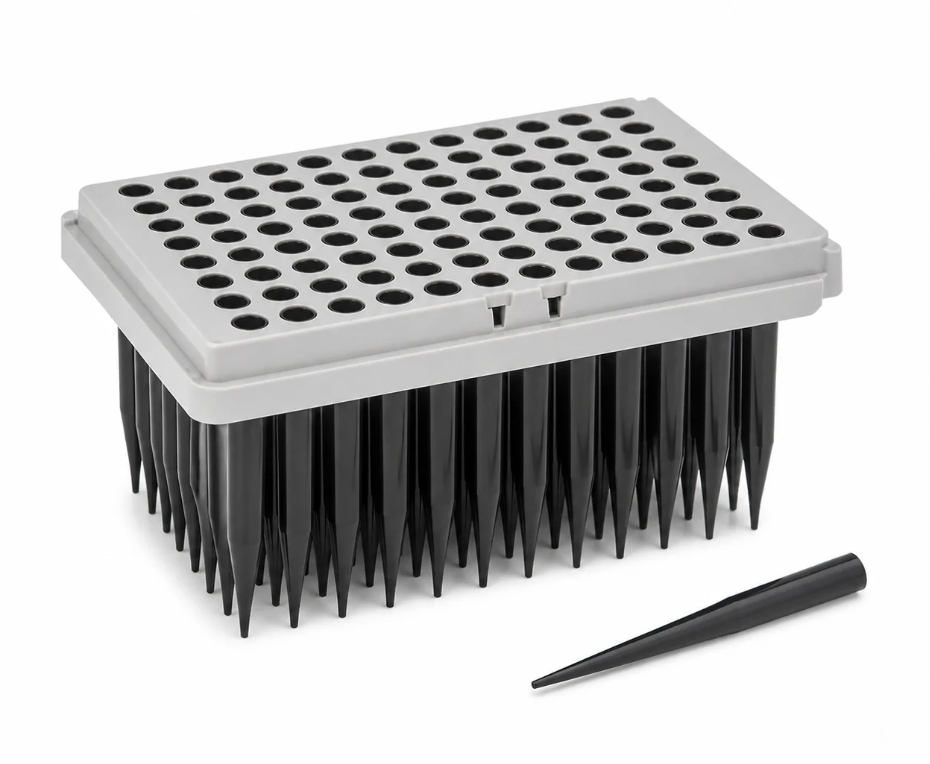
These automated liquid handling tips are designed for platforms requiring conductive liquid-level sensing.
- Material & Structure: Manufactured from polypropylene with conductive material to support capacitive liquid sensing.
- Key Advantages: Controlled mold geometry supports tip straightness, stable tip-cone interface contact, and dependable tip pickup reliability.
- Target Applications: Suitable for automated biobanking, clinical diagnostics, aliquoting, and other high-throughput liquid handling workflows.
Puretest Low-Retention Filtered Robotic Tips
Filtered robotic pipette tips are designed for genomics and molecular biology workflows where aerosol protection and liquid recovery are important.
- Material & Structure: Low-retention polymer surfaces are combined with hydrophobic aerosol barrier filters.
- Key Advantages: Consistent geometry supports pipetting accuracy, pipetting precision, and reliable tip ejection during repetitive automation.
- Target Applications: Suitable for PCR setup, NGS workflows, and cell-based assays on compatible robotic platforms.
Ensuring Seamless Automation: Next Steps for Lab Managers
Selecting the right pipette tips for liquid handling robots helps protect instrument uptime and improve workflow consistency.
Upgrade Your Liquid Handling Reliability Today
Validated robotic pipette tips should be assessed through a structured pipette tip compatibility testing process before routine use.
- Evaluate Compatibility: Test tip pickup reliability, pipette tip sealing performance, tip ejection reliability, and mechanical fit on your specific liquid handling platform.
- Perform Full-Head Qualification: Measure pipetting accuracy, pipetting precision, and channel-to-channel consistency across the entire robotic head.
- Request Samples: Evaluate Puretest automated liquid handling tips directly within your target workflow before larger-volume purchasing.
- Optimize Operations: Partner with Puretestfor customized consumable solutions designed around specific automation platforms and high-throughput liquid handling requirements.
FAQ
Q: Are universal pipette tips suitable for all automated liquid handling systems?
A: No. Universal pipette tips should not be assumed compatible with every automated platform. Mechanical fit, tip-cone interface geometry, sealing, pickup force, and ejection behavior should all be confirmed through pipette tip compatibility testing.
Q: Why is the tip-cone interface important for pipetting precision?
A: The tip-cone interface creates the air seal required for accurate aspiration and dispensing. Poor pipette tip sealing performance can introduce air leakage, which reduces both pipetting accuracy and pipetting precision.
Q: What should be included in full-head qualification for robotic pipette tips?
A: Full-head qualification should evaluate pickup and ejection, sealing, volumetric accuracy, CV%, channel-to-channel consistency, straightness, liquid-level sensing where applicable, and repeated-cycle performance.
Q: Why is tip straightness important in high-throughput liquid handling?
A: Straight robotic pipette tips help maintain accurate positioning in dense microplates. Bent or poorly concentric tips can contact well walls, miss target positions, or increase contamination risk during high-throughput liquid handling.