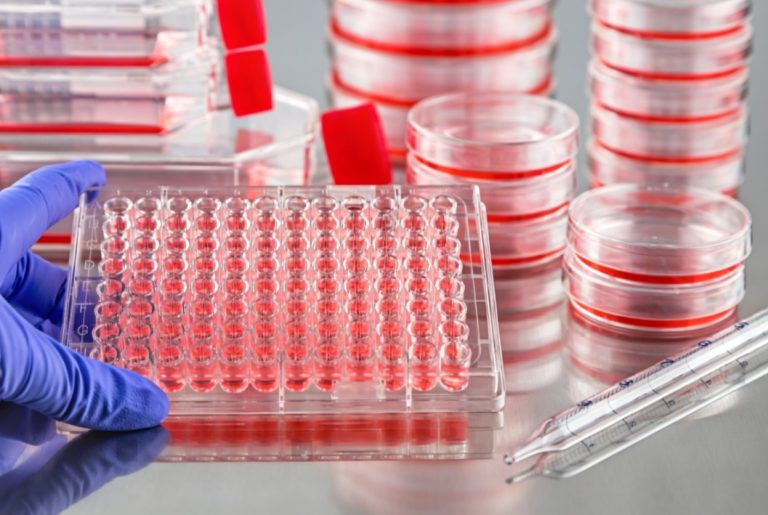
In the careful field of biotechnology and clinical diagnostics, there is almost no room for mistakes. When you move delicate cell culture media or perform important diagnostic tests, the quality of your liquid handling determines how reliable your outcomes are. Puretest, a top one-stop maker of biomedical consumables, knows that a pipette is more than a simple tube. It serves as a vital instrument for scientific precision.
This guide looks into the details of serological pipettes, their various uses, and ways to pick the best tools to improve your lab routine.

Understanding the Core Types of Serological Pipettes
Serological pipettes are lab tools calibrated for temperature, and they help transfer liquid volumes, usually from 1 ml to 100 ml. Knowing the materials involved is the initial step to guarantee success in experiments.
Plastic vs. Glass: Materials and Compliance
- Disposable Plastic (Polystyrene): Many current labs choose clear, 100% virgin polystyrene. These are for one-time use, which avoids cross-contamination risks and saves money on sterilization processes like autoclaving. They need to follow USP Class VI standards to make sure no harmful materials leak into samples.
- Reusable Glass: Pipettes made from borosilicate glass provide better resistance to chemicals, and they suit special tasks where plastic could react with the substances involved.
Sterility Levels and Certification
For reliable results, pipettes must lack biological impurities. Seek out items certified as follows:
- RNase/DNase-free: This is key for molecular biology, as it stops RNA or DNA from breaking down.
- Non-Pyrogenic/Endotoxin-free: It matters a lot for cell culture, since it avoids reactions that harm sensitive cell types.
- SAL 10⁻⁶ Sterility: This level comes from E-beam or Gamma irradiation, offering top safety against microbes.
Essential Applications: Where Precision Meets Practice
Serological pipettes address particular practical and technical issues in the lab.

Cell Culture and Media Preparation
In cell biology, a main issue is keeping a clean space while accurately adding growth media and additives.
- The Problem: Tools that lack accuracy or sterility can cause contamination in batches or uneven cell growth.
- The Solution: Sterile serological pipettes enable quick movement of large media amounts into Puretest Cell Culture Flasks or Plates without adding unwanted particles.
Microbiology and Clinical Diagnostics
In diagnostics, you need to shift patient samples, like blood or serum, into testing reagents.
- The Problem: Contamination from liquid spray during release can create safety concerns and incorrect test results.
- The Solution: A good filter plug built into the pipette’s top blocks liquids and sprays from reaching the pipette controller, which safeguards the user and the sample.
Biotesting and Pharmaceutical R&D
Scaling up test calls for steady performance across many samples.
- The Problem: Older pipettes often show unclear or faded marks, which lead to reading mistakes from the wrong angle.
- The Solution: Markings that go both up and down let workers see the amount given and the amount left, cutting down on errors made by people.
Key Features to Look for in High-Quality Pipettes
For better workflow, a pipette should do more than just hold liquid.
- Precision Graduations: Clear, bold black marks are essential for easy reading. Extra negative marks give added capacity, so you can handle a bit more than the main size.
- Color-Coding: Standard color strips, such as yellow for 1ml, green for 2ml, and blue for 5ml, help with fast spotting in a busy lab, which lowers mix-up chances.
- Optimized Tip Design: A smooth, even tip reduces liquid sticking, and that helps when dealing with costly chemicals.

Featured Solutions from Puretest
As a focused maker, Puretest offers strong liquid handling options built for tough industrial and clinical tasks.
Puretest Disposable Plastic Serological Pipettes
Plastic Serological Pipettes use high-clarity GPPS (General Purpose Polystyrene) in their construction.
- Features: They come in sizes of 1ml, 2ml, 5ml, 10ml, 25ml, and 50ml. Each one includes a reliable filter plug to stop overflow.
- Advantage: E-beam irradiation sterilizes them to a SAL of 10⁻⁶. Because of this, transferring samples into Puretest Cryovial Tubes or PCR Plates carries no chance of adding outside DNA or pyrogens.
- Application: They work well for large-scale genomic studies and everyday care of cell lines.
Puretest Graduated Glass Serological Pipettes
Glass Serological Pipettes suit labs need lasting chemical strength and the option to reuse.
- Features: Made from top-grade glass with lasting amber or blue marks.
- Advantage: They offer great clarity and stand up well against acids and bases.
- Application: They fit chemical testing and mixing strong reagents, where plastic might not hold up.

How to Select the Right Pipette for Your Laboratory
Picking an unsuitable pipette wastes time and materials. Think about these points:
- Volume Matching: Select a pipette size that matches the volume you plan to move. For instance, using a 50ml one for just 2ml cuts down on precision.
- Packaging Preference:
- Individually Wrapped: This suits clean spaces like cleanrooms, where sterility is a must.
- Bulk Packed: It costs less and uses fewer resources for routine tasks that do not need full sterility.
- Compatibility: Check that the pipette fits well with your current electronic pipette controllers. Puretest pipettes have a standard connection to avoid any leaks.
Conclusion
Lab precision comes from good skills and solid consumables working together. By grasping what your task requires, such as the cleanliness for cell culture or the exactness for diagnostics, you can choose the serological pipette that delivers strong results.
Puretest stands ready to back your research with a wide array of lab items, including Blood Collection Tubes to PCR Series and Pipette Tips. We deliver the dependability you seek, so you can concentrate on your work.
Ready to Upgrade Your Lab Efficiency?
Reach out to Puretest now for a tailored quote or to get free samples for your upcoming project. Our support team is prepared to assist in matching the right items to your daily tasks.
- Email: sales@biopuretest.com
- WhatsApp: +86 151 6712 9685
FAQ
Q: Can serological pipettes be used with any brand of pipette controller?
A: Most well-made serological pipettes, like those from Puretest, feature a standard top size. As a result, they work with all leading electronic and manual pipette controllers available.
Q: What is the difference between “to deliver” (TD) and “to contain” (TC) pipettes?
A: Serological pipettes usually act as “To Deliver” (TD) devices. They are set to release the precise volume shown on the markings, taking into account the small liquid amount that clings to the tip from surface tension.
Q: Why is “Non-Pyrogenic” certification important for serological pipettes?
A: Pyrogens, such as endotoxins, can trigger fever or kill cells. In cell culture and drug production, tiny traces might spoil a whole set of cells or products, so this certification plays a crucial role in keeping things safe.
Q: How do I prevent liquid from being drawn into the pipette controller?
A: Make sure your serological pipette includes a built-in filter plug, which serves as a shield. On top of that, a controller with a fine control button helps manage the flow and avoids drawing in too much liquid.