Achieving consistent qPCR data is a major challenge in molecular diagnostics and genomic research today. Small variations in amplification curves often lead to errors when interpreting important results, especially in pharmaceutical development or clinical diagnostics. Puretest serves as a top manufacturer and supplier of biomedical consumables, such as PCR plates, cell culture flasks, cryovial tubes, and reagent bottles. The company focuses on creating quality lab solutions to reduce inconsistencies in experiments. This guide looks at the reasons for amplification variance and shares practical industry methods to obtain reliable qPCR data suitable for publication.
Analyzing the Core Vectors of PCR/qPCR Data Variance
Understanding the mechanical and physical variables that disrupt cycling conditions is the first step toward achieving experimental consistency.
Thermal Transfer Efficiency and Well Uniformity
Thermal uniformity across the entire thermocycler block dictates whether your replicates amplify at identical rates.
- Wall Thickness Variations: Minor fluctuations in plastic mold design create uneven barriers to heat, leading to staggered denaturation temperatures.
- Material Impurities: Standard polypropylene blends often contain trace contaminants that distort infrared or thermal energy conduction.
- Well Contact Geometry: A mismatch between the plate contour and the thermal block creates micro-gaps of air, acting as thermal insulators that delay the transition between temperature steps.
Sample Evaporation and Edge Effects
Evaporation during thermal cycling alters the concentration of master mix components, completely shifting Cq values.
- The 10% Evaporation Threshold: Research indicates that a mere 10% volume loss due to poor sealing can cause a premature or delayed Cq shift by up to 0.5 to 1.0 cycles.
- Perimeter Vulnerability: Wells located at the outer borders of a plate experience higher radiative heat from the cycler lid, compounding the rate of evaporation compared to inner wells.
- Deformation Under Pressure: High-temperature protocols exceeding 95°C soften low-grade plastics, leading to plate warping and subsequent seal failure.
Actionable Protocols to Optimize Your Amplification Workflows
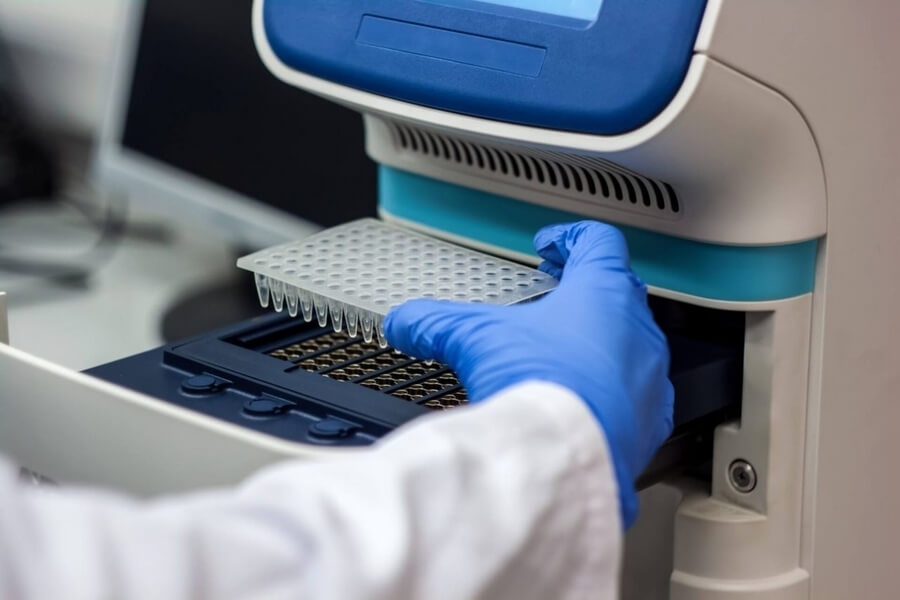
Eliminating technical variance requires a deliberate synergy between strict pipetting protocols and high-performance hardware.
Selecting the Right PCR Plate Geometry for High-Throughput Screening
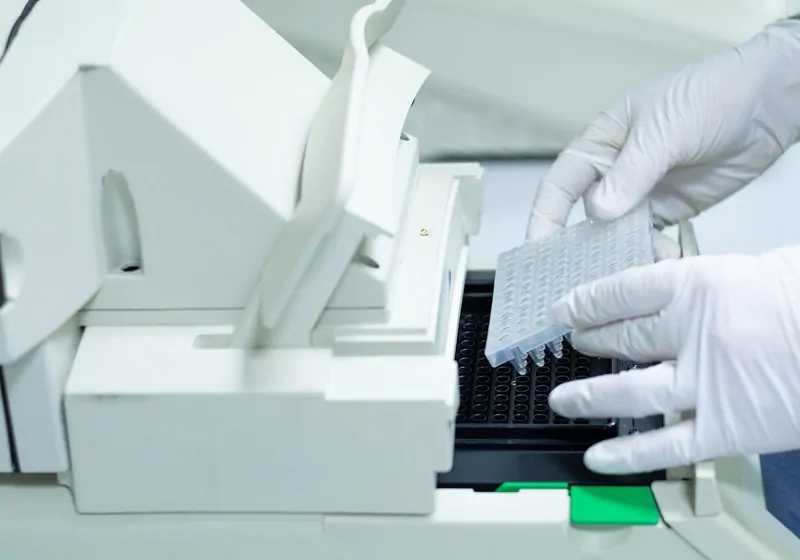
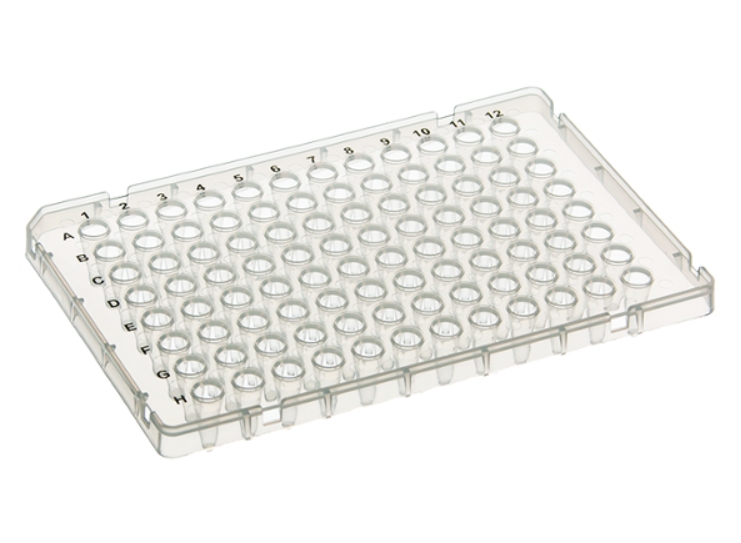
The structural design of your PCR plate must directly match the specific optical and mechanical requirements of your thermocycler model.
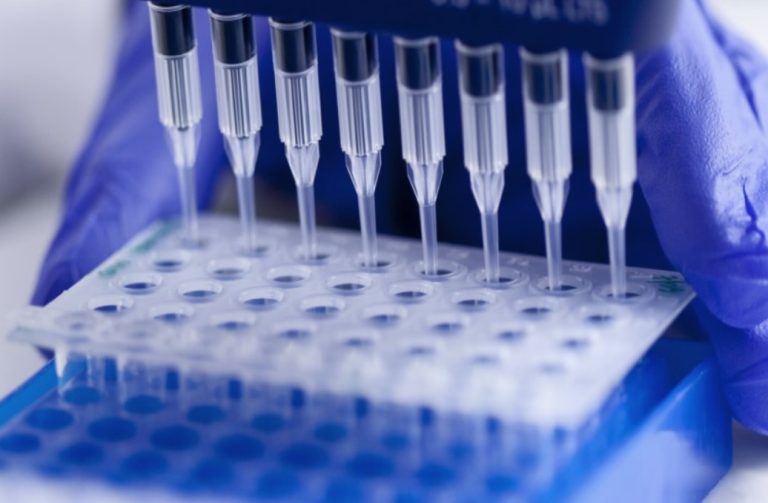
- Puretest 40 uL 384-Well PCR Plate (ABI®-Type, One-Notch): This plate features a full-skirted architecture tailored for high-throughput automated liquid handlers, offering an A24 corner notch for precise machine orientation. It leverages ultra-thin, uniform polypropylene walls to maximize heat transfer efficiency in high-density screening workflows.
- Puretest 1 mL PCR Plate (Semi-Skirted, FAST®-Type): Engineered with a low-profile design and an A1 corner configuration, this model minimizes dead air space above the reaction volume. This specific geometry accelerates thermal cycling times and reduces condensation, making it ideal for rapid fast-cycling protocols.
- Puretest 0.2 mL PCR Plate (Semi-Skirted, Straight Side): Featuring a standard profile with an A12 corner, this plate is built with rigid straight sides that prevent warping during prolonged, high-temperature multi-step amplification programs.
Standardizing Sealing Techniques to Prevent Volume Loss
Securing an airtight barrier across every individual well is vital to maintaining molecular concentrations during denaturation.
- Raised Rim Architecture: Premium pcr plates utilize distinct well ridges that provide a concentrated contact surface, maximizing the physical bonding strength of sealing films or optical cap strips.
- Uniform Pressure Application: Always employ a dedicated plate roller or sealing scraper, applying consistent down-force from the center of the plate outward to lock the perimeter wells.
- Optical Clarity Verification: Ensure that sealing films over qPCR assays remain completely free of fingerprints or creases, as physical smudges scatter excitation lasers and generate artificial fluorescence spikes.
Eliminating Cross-Contamination and Material Interferences
Chemical and biological purity in consumables stops false positives. It also cuts background noise interference.
Preventing Leachables and Background Fluorescence
Unrefined plastics contain slip agents, biocides, and plasticizers. These additives can inhibit DNA polymerase activity.
- Ultra-Pure Polypropylene: Medical-grade virgin polypropylene stops chemical leaching into the reaction mix. Enzyme kinetics stay stable.
- Certified Purity Standards: Consumables must stay certified free of detectable DNase, RNase, human DNA, and PCR inhibitors. This protects low-copy-number target molecules.
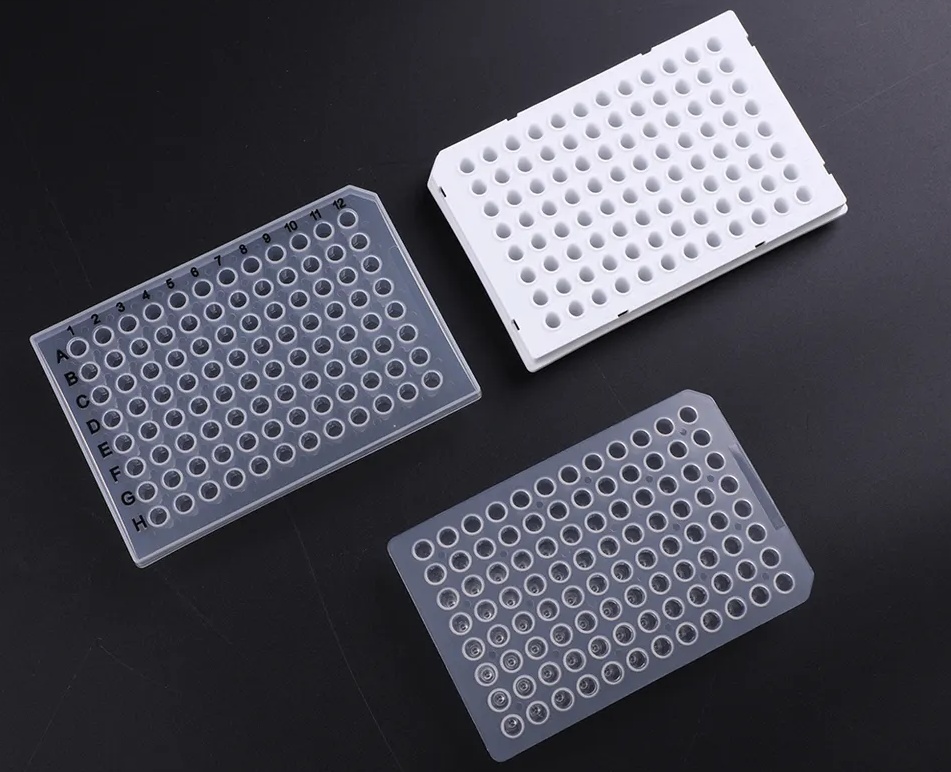
- Signal-to-Noise Optimization: Pure-white wells reflect more signal back to the optical detector. Background noise drops in low-abundance target assays.
How Puretest Guarantees Consumable Consistency
Controlling production differences calls for tight checks on manufacturing precision. Our advanced plants and custom support help every batch match the high consistency that labs need today.
- Automated Precision Manufacturing: Our plates come from a 15,000-square-meter plant that follows ISO13485 and CE rules. It has over 100 fast electric molding machines plus an MES system for steady output.
- Ultra-Pure Production Environment: All consumables are made in Class 100K GMP clean rooms. This setup cuts biological contamination risks through steady workflows and less direct handling.
- Rigorous Multi-Phase Quality Control: Each batch faces incoming, in-process, and final checks. These cover size accuracy, germ safety, and performance tests.
- Tailored OEM/ODM Capabilities: Our R&D team makes up more than 25 percent of staff. We handle full custom work such as mold design, private labels, and special packaging.
- One-Stop Global Supply & Support: We act as a full lab supplier and offer free sample kits for testing. Flexible payment options and steady shipping reach labs worldwide.
Conclusion
Optimizing your PCR and qPCR data consistency relies on controlling the micro-physical environment of your amplification reaction. By combining rigorous protocol execution with Puretest high-precision PCR plates, laboratories can significantly eliminate edge effects, uneven thermal conduction, and evaporation-driven Cq shifts. Ready to elevate your laboratory’s data reproducibility?
Contact Puretest today at sales@biopuretest.com to request your complimentary sample kit and experience unmatched thermal uniformity.
FAQ
Q: Why do my outer perimeter wells show higher Cq variability compared to the inner wells of my PCR plate?
A: This is driven by “edge effects,” where outer wells experience greater thermal dissipation and radiative heat from the instrument chassis. Utilizing plates with ultra-thin, uniform walls alongside high-pressure plate rollers significantly mitigates this localized evaporation.
Q: What is the primary functional difference between using clear wells and white wells in a qPCR assay?
A: Clear wells let excitation light reach the thermal block. This may cause some signal loss. White wells bounce fluorescence back to the optical sensors. They raise the signal-to-noise ratio for low-copy-number targets.
Q: How does a low-profile PCR plate improve data accuracy for low-volume (e.g., 10–20 µL) reactions?
A: Low-profile plates, such as the 0.1 mL options, cut the air space between the liquid sample and the sealing film. Less space means less room for evaporation or condensation. Reagent concentrations stay steady as a result.
Q: Can autoclave sterilization cause issues with high-precision qPCR plates before an experiment?
A: Yes. Autoclaving can warp the plastic slightly. It may also let airborne contaminants settle on the plates. Buying factory-certified sterile plates that are already DNase/RNase-free works better. This keeps optical and thermal performance intact.