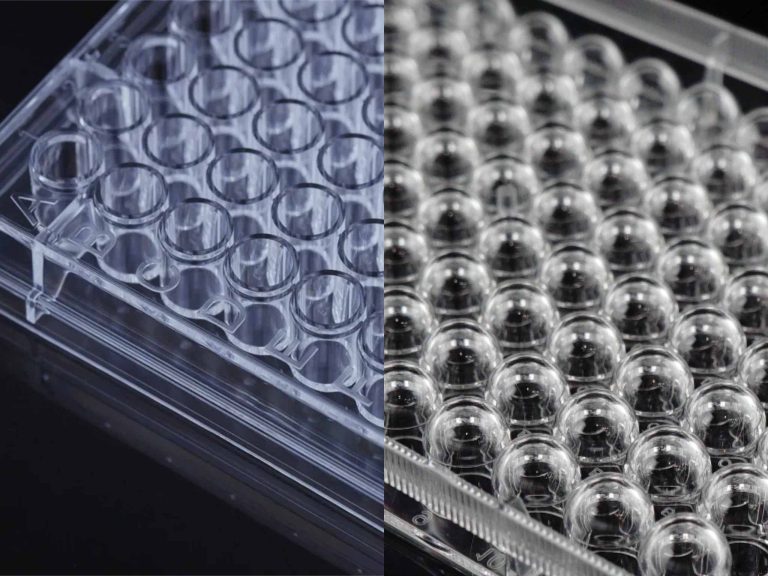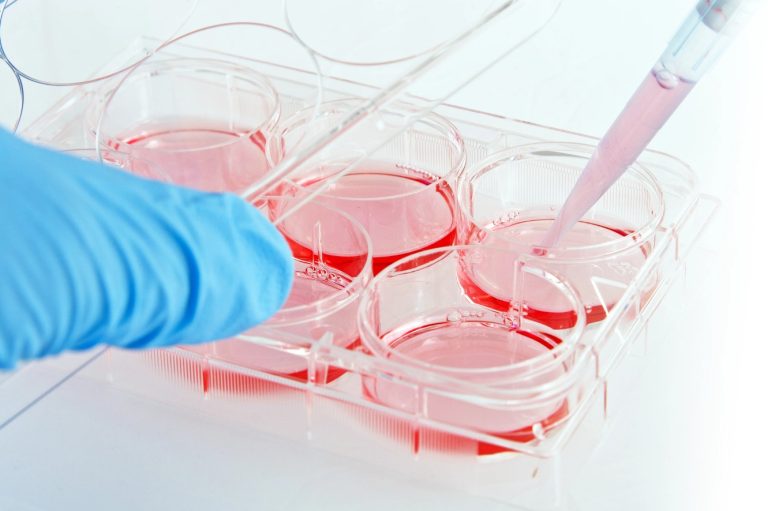

In molecular biology, the Polymerase Chain Reaction (PCR) drives key findings. You might work on gene expression studies, pathogen checks, or forensic analysis. In all cases, data accuracy depends on one key part that often gets ignored: the PCR plate. At Puretest, we make biomedical consumables from start to finish. We know that even the best thermal cycler cannot fix problems from bad plate handling or low-quality items. This guide covers basic methods for managing PCR plates. It helps your lab get reliable results every time.
Pre-Analytical Precision: Selecting and Preparing Your PCR Plate
Good PCR amplification starts well before the first heating step. It begins with careful setup and picking the right equipment for your test needs.
Compatibility with Thermal Cyclers: Skirt Types Explained
A PCR plate‘s design goes beyond looks. It affects how heat spreads and works with machines.
- Non-Skirted Plates: Ideal for manual workstations and older cyclers, offering flexibility but requiring more care during handling.
- Semi-Skirted Plates: Providing additional rigidity for robotic arms, such as the Puretest 0.2 mL ABI®-Type, which ensures a secure fit in specific thermal blocks.
- Full-Skirted Plates: The gold standard for high-throughput automation, offering the mechanical strength needed for plate-stacking systems.
Material Integrity: Why Virgin Polypropylene Matters
Studies show that chemicals leaching from cheap plastics can cut polymerase function by as much as 25%. Quality PCR plates use medical-grade, virgin polypropylene. This keeps the material neutral to avoid pulling in samples. It also stops plastic bits from dimming the weak light signals in qPCR tests.

Step-by-Step Guide to PCR Plate Handling
In molecular biology, steady work comes from regular steps. Standard handling rules help avoid changes in tests and loss of samples.
Loading Best Practices: Minimizing Human Error
Dealing with small amounts like 5–10 µL calls for exact work.
- Temperature Control: Always load plates on a cold block to prevent premature enzyme activation or primer-dimer formation.
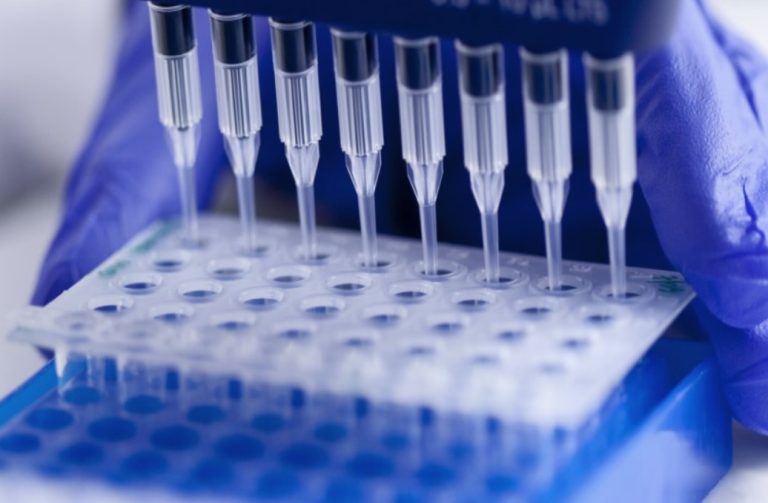
- Angle of Pipetting: Dispense liquids against the side wall of the well to avoid splashing, but ensure the tip does not touch the bottom to prevent contamination.
- Static Management: In dry laboratory environments, static electricity can cause small volumes to “jump.” Using anti-static tools or ionizers can safeguard your master mix integrity.
Sealing Techniques: Preventing Evaporation and Cross-Contamination
Losing liquid through evaporation causes most PCR problems. Just a 10% drop can change salt and dNTP levels. That leads to uneven CT readings.
- Adhesive Films: Use a professional pressure-sensitive film. Apply pressure across the entire surface, paying special attention to the edges.
- Heat Sealing: For long-term storage or high-pressure cyclers, heat sealing provides a permanent, evaporation-proof barrier.
- Visual Inspection: Puretest PCR plates feature raised well ridges specifically designed to create a more robust “lock” with sealing films, significantly reducing the risk of edge-effect evaporation.
Centrifugation: The Crucial Final Step
Always do the quick spin. Wells may seem full, but tiny air pockets or wall drops can block heat flow and light reading. A short 1-minute turn at 1,000 x g gathers all parts at the thin well bottom.
Puretest Solutions: Engineering Excellence in PCR Consumables
As a focused maker, Puretest turns lab issues into solid fixes. Our line covers blood tubes to full PCR tools. We follow a “One-Stop Solution” approach.

Technical Advantage: Ultra-Thin Wall Technology
The heart of Puretest PCR plates is our exact shaping. They have ultra-thin, uniform walls that beat typical market options in thinness.
- The Benefit: This reduces thermal lag. When the cycler hits 95°C for denaturation, a Puretest PCR plate ensures the sample reaches that temperature almost instantaneously. This uniformity across all 96 or 384 wells eliminates the “edge effect” where outer wells perform differently from inner ones.
Comprehensive Portfolio: From 96-Well to 384-Well High-Throughput
We offer setups for the main cycler types:
- 1 mL Low-Profile PCR Plates: Perfect for FAST®-type cyclers and LightCycler® systems, reducing dead space and enhancing signal-to-noise ratios.
- 384-Well High-Density PCR Plates: Designed for the Puretest Roche®-Type and ABI®-Type configurations, featuring two-notch or one-notch designs for foolproof orientation in robotic systems.
- Alphanumeric Indexing: All PCR plates include high-contrast black indexing to simplify sample tracking and reduce manual pipetting errors.
Quality Assurance: DNase/RNase-Free and ISO-Certified Production
We build in Class 100K GMP clean areas. Each lot tests clear of DNase, RNase, human DNA, and PCR blockers. Our full auto line with MES cuts human touch. So the PCR plate you use now matches the one from next year in how it works.
Solving Laboratory Challenges: Puretest Service and Application
Good hardware alone does not meet today’s research needs. Labs want full support that links specs to the daily workflow.

One-Stop Solutions for High-Throughput Screening
In drug development or big testing, like during outbreaks, labs hit supply snags. Puretest fixes this with a full setup. We go past PCR plates to include matching Pipette Tips (Universal, Rainin LTS, Robotic), Sealing Films, and Centrifuge Tubes. This keeps everything working together. It avoids mix-up troubles from different brands.
Customization (ODM/OEM) for Specialized Research
Many IVD makers need custom PCR plate shapes or codes for their systems. Puretest gives strong ODM/OEM help. Over 25% of our team works on R&D. With more than 15 years in mold making, we turn ideas from drawings to clean, ready products fast. This fills gaps where standard items fall short for special clinical work.
Conclusion: Elevating Your Research with Puretest
Steady PCR outcomes mix careful steps with strong supplies. Knowing heat flow and plastic traits lets scientists cut out test flaws. Puretest stays dedicated to giving scientists worldwide top consumables. They support your work quietly and well.
Ready to Upgrade Your Lab’s Performance?
Explore our full range of PCR plates and laboratory supplies. Our technical team is ready to provide free samples and expert consultation for your specific thermal cycler requirements.
[Contact Puretest Today for a Quote and Free Sample Kit]
- Email: sales@biopuretest.com
- WhatsApp: +86 151 6712 9685
FAQ
Q: Why should I choose low-profile (0.1 mL) PCR plates over standard (0.2 mL) PCR plates?
A: Low-profile PCR plates reduce the “dead space” between the sample and the lid. This minimizes evaporation and improves fluorescence signal intensity in qPCR, especially for small-volume reactions.
Q: Are PCR plates compatible with all brands of thermal cyclers?
A: Not universally. Compatibility depends on the “skirt” design and height. Always check if your cycler requires a specific format, such as ABI-type semi-skirted or Bio-Rad type full-skirted PCR plates.
Q: How does “Ultra-Thin Wall” technology affect my PCR results?
A: Thinner walls allow for faster and more uniform heat transfer from the thermal block to your reagents. This improves reaction specificity, reduces run times, and ensures consistent results across all wells.
Q: Can I reuse PCR plates if they have been cleaned?
A: It is strongly discouraged. PCR is highly sensitive to cross-contamination and residual DNA. Additionally, the heating process can cause micro-deformations in the plastic, compromising the seal and thermal contact in subsequent runs.