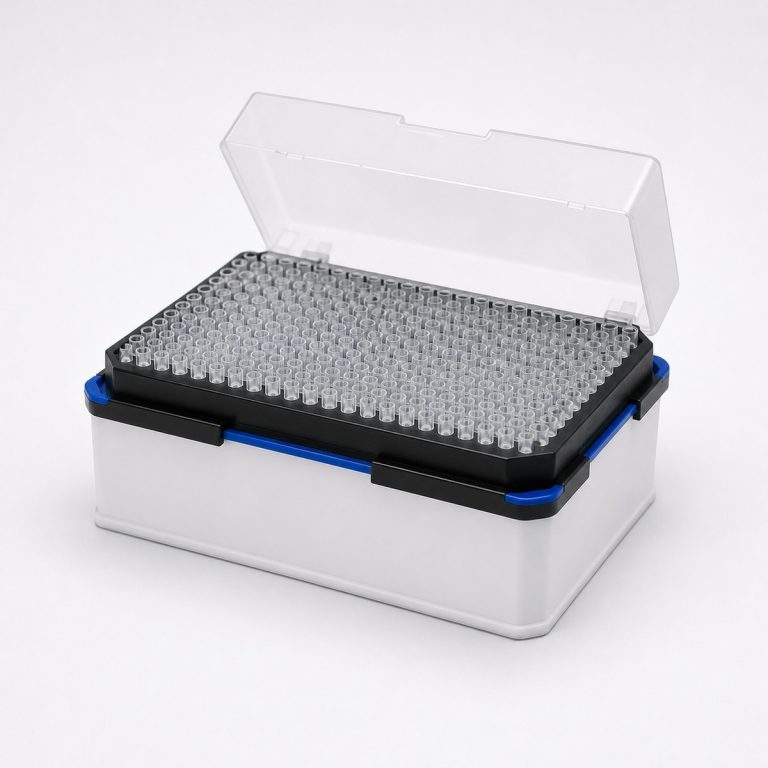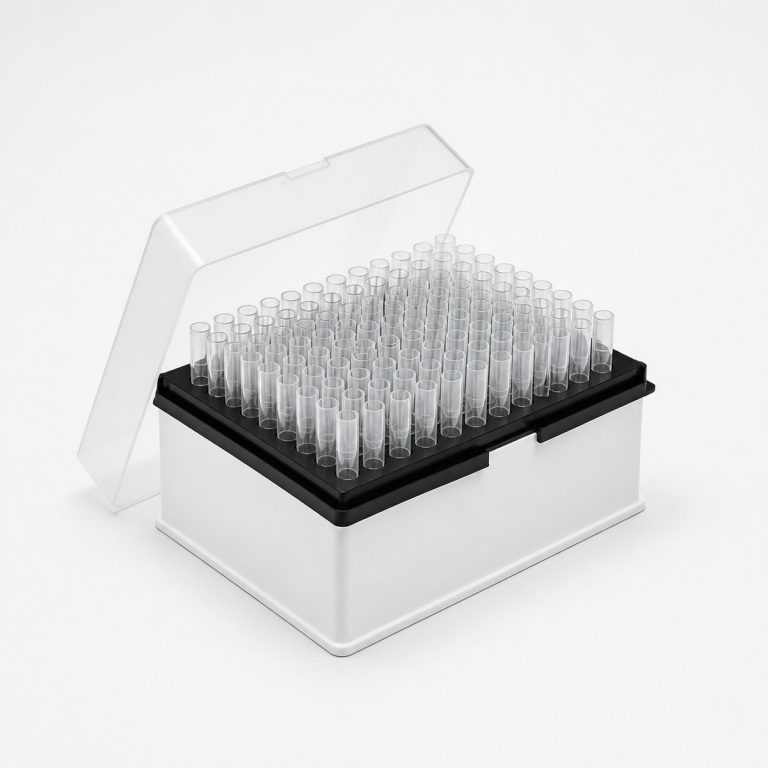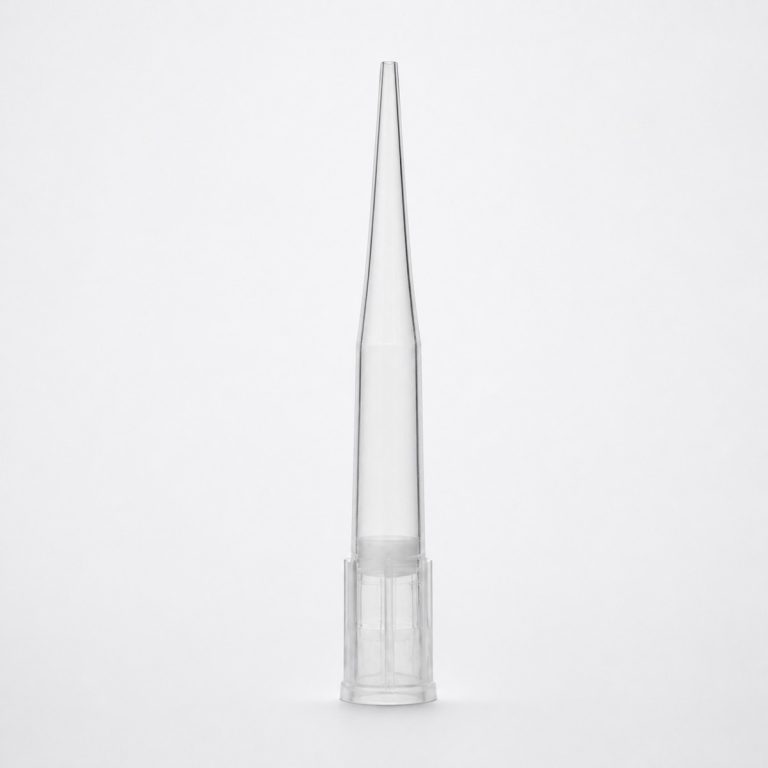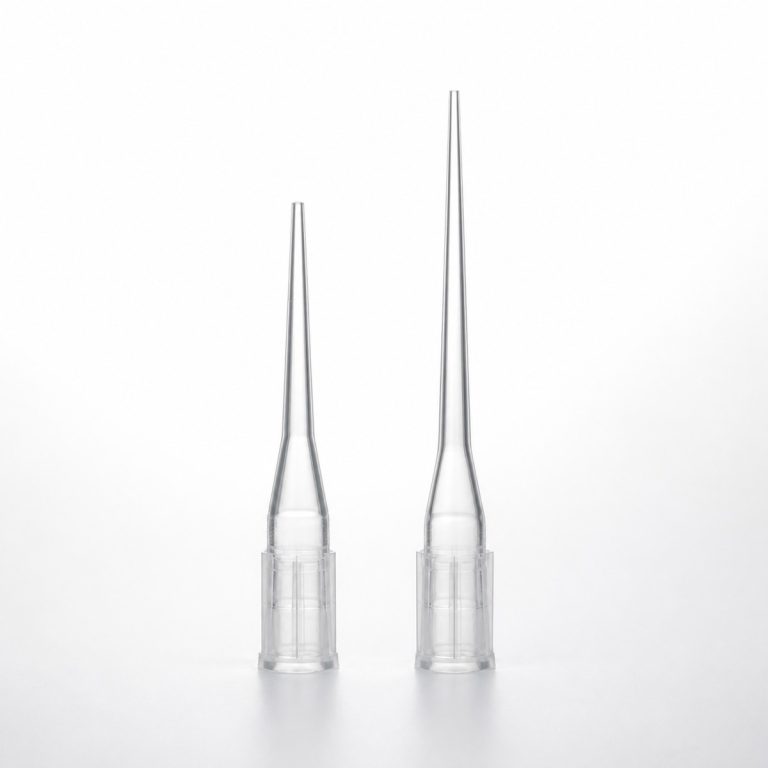
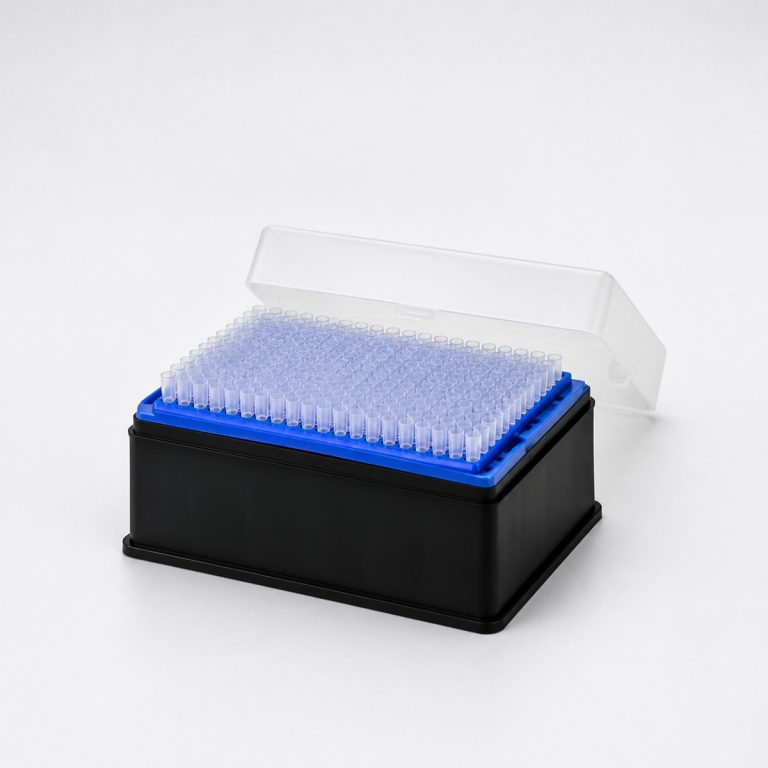
10 µL Robotic Pipette Tips Compatible with Agilent Bravo, 384-Format for compatible automated liquid-handling workflows.
Puretest 10 µL robotic pipette tips are intended for assay miniaturization, low-volume reagent dispensing and high-density 384-well plate preparation. This page is structured for automation engineers, laboratory managers, procurement teams, distributors and OEM buyers who need an auditable selection process rather than a generic statement that a tip “fits.”
Agilent platform literature associates the 10 µL tip family with an approximate 0.3–10 µL transfer range and 96ST or 384ST pipetting-head workflows. This is a platform reference, not a blanket performance claim for every Puretest configuration. The installed head, rack carrier, liquid class and sellable Puretest SKU must be confirmed together.
Reliable automated pipetting depends on the complete system: instrument, installed head or channel, tip-cone interface, rack, carrier, software tip definition, liquid class, source and destination labware and liquid properties. Puretest recommends sample qualification with the intended method before routine or validated use.
A robotic pipette tip functions as part of a mechanical and fluidic system. Cone-interface consistency influences sealing and pressure behavior; shaft geometry affects labware access; the distal section influences residual liquid and dispense behavior; and rack registration determines multi-channel pickup reliability. Filter placement, orifice geometry and material can each change usable volume or liquid-class performance.
Qualification must therefore use the exact sellable configuration. A change from non-filtered to filtered, standard to extended or wide-bore, clear to conductive, or non-sterile to sterile supply should be documented and the relevant mechanical and liquid-handling checks repeated.
| Specification | Family / Platform Context | Qualification or Ordering Note |
|---|---|---|
| Nominal family | 10 µL | Select for low-volume methods; verify the lowest critical transfer |
| Platform literature range | Approximately 0.3–10 µL | Reference context only; customer qualification is required |
| Rack density | 384-format | Confirm carrier, pickup coordinates, rack height and lid clearance |
| Head context | Compatible Bravo 96ST / 384ST workflows | Provide the exact installed head and method |
| Material / sensing | Clear or conductive configuration by SKU | Confirm whether conductive liquid-level detection is required |
| Filter / sterile / nested | Configuration-dependent | Confirm each option and current documentation in the RFQ |
| Tip geometry | Standard low-volume geometry; special variants by SKU | Do not substitute a visually similar tip without qualification |
Platform-literature values describe the compatible automation context; they do not create a universal Puretest performance guarantee. Puretest will confirm the actual quoted configuration, available documents and sample plan.
Agilent platform literature associates the 10 µL tip family with an approximate 0.3–10 µL transfer range and 96ST or 384ST pipetting-head workflows. This is a platform reference, not a blanket performance claim for every Puretest configuration. The installed head, rack carrier, liquid class and sellable Puretest SKU must be confirmed together.
| Qualification Item | Why It Matters | Recommended Check |
|---|---|---|
| Instrument and head | One platform family may support multiple heads and tip definitions | Provide the exact platform, installed head/pod and software method |
| Rack and carrier | Footprint, height and registration determine reliable pickup | Confirm carrier, deck coordinates, lid clearance and rack seating |
| Pickup, seal and ejection | Mechanical consistency affects pressure, retention and error rate | Inspect every active channel across representative deck positions |
| Liquid class | Viscosity, volatility, surface tension and foaming change transfer behavior | Tune speeds, delays, immersion depth, pre-wetting, air gaps and tip touch |
| Critical transfer points | A nominal family does not guarantee every method volume | Test minimum, routine and maximum critical volumes with real liquids |
| Variant changes | Filters, material, geometry and sterility can alter behavior | Requalify each materially different sellable configuration |
For second-source qualification, send the exact platform, installed head or pod, current tip reference or drawing when available, rack carrier, target volumes, liquids, filter and sterility needs and annual consumption.
| Configuration | Typical Reason to Select | What to Confirm |
|---|---|---|
| Clear / non-conductive | Visual setup and methods without conductive sensing | Material, sterility and filter state |
| Conductive | Compatible liquid-level-detection strategies | Instrument hardware, head and method support |
| Filtered | Aerosol-barrier or contamination-sensitive work | Filter material and usable volume |
| Nested / stackable | Longer unattended runs and reduced deck interventions | Nest count, deck height and gripper access |
Not every option is necessarily available in every volume and rack combination. The final quotation should identify material, conductivity, filter state, sterility, rack format, wrapping, case quantity and required technical documents.
At sub-10 µL volumes, evaporation, pre-wetting, aspiration depth, liquid surface behavior and dispense position can dominate performance. Qualification should include the lowest critical transfer rather than testing only a convenient midpoint.
Automation consumables may require material information, product specifications, irradiation or sterility records, lot traceability, certificate of analysis and RNase/DNase or pyrogen/endotoxin declarations. Availability and limits depend on the exact SKU and current production configuration.
Do not transfer a claim from another capacity, material or package format. State required documents in the RFQ so Puretest can confirm what applies before order placement. Customers remain responsible for final qualification in regulated or validated workflows.
Racked robotic tips can be supplied in configurations appropriate to the selected platform and market. Confirm rack footprint, lid, wrapping, sterile state, label, barcode or lot-data needs, case quantity and pallet/carton requirements. Supply planning may include evaluation lots, production batches, annual forecasts and safety stock.
For international orders, provide delivery country, annual or monthly demand and required import or technical documents. Configuration, minimum order quantity and lead time are confirmed during quotation.
Bravo-compatible selection commonly spans 10, 30, 70 and 250 µL families. The 10/30/70 µL groups are commonly associated with high-density workflows, while the 250 µL family is commonly associated with a 96-format rack. Match the family to the installed head rather than capacity alone.
Choose the smallest capacity that comfortably covers the validated transfer range, while matching the installed head and rack format. A protocol spanning substantially different volumes may benefit from more than one tip family.
| Information to Send | Example | Why It Helps |
|---|---|---|
| Platform and installed head | Agilent Bravo | Prevents selection by brand name alone |
| Target transfer range | 10 µL | Supports capacity and filter-state selection |
| Rack / carrier | 384-format rack | Confirms footprint, density and pickup geometry |
| Liquid characteristics | Aqueous, viscous, volatile, foaming, cells or beads | Guides geometry and qualification planning |
| Required options | Filter, sterile, conductive, nested or special geometry | Defines the exact quotation variant |
| Commercial details | Annual quantity, delivery country and required documents | Supports MOQ, lead time and logistics review |
A complete RFQ enables Puretest to recommend a specific sellable configuration and reduces sample cycles, especially when multiple rack or filter variants exist under the same nominal capacity.
Puretest supports laboratories, automation integrators, distributors and private-label buyers serving Europe, North America and other international markets. Programs can cover evaluation samples, annual demand, safety stock, carton configuration, labels, artwork, lot information and shipping documents.
OEM/private-label availability is subject to configuration, minimum order quantity, forecast, artwork and lead-time review. Private labeling does not remove the need for customer-side compatibility and method qualification.
No. They are Puretest-manufactured robotic pipette tips designed for compatibility with specified Agilent Bravo workflows. Puretest is not affiliated with or endorsed by the instrument manufacturer.
No. Usable performance depends on platform, head or channel, filter, internal geometry, liquid class and application. Use the family as a selection starting point and validate critical transfers.
Provide the exact instrument, installed head or pod, rack/carrier and current tip reference when available. Test a sample for pickup, sealing, ejection and liquid-handling performance.
Availability is configuration-dependent. State filter, sterility, wrapping and required documents in the RFQ so the exact sellable configuration can be confirmed.
Do not assume so. A filter changes usable internal space and can affect fluid behavior. Qualify the filtered configuration separately.
Only when the validated method uses a compatible conductive liquid-level-detection strategy or another requirement specifies conductive material. Confirm hardware and method settings.
Yes. Sample evaluation is recommended before routine use, particularly for a new method or second-source qualification.
Send platform, installed head or pod, target volumes, liquids, filter, sterility, conductivity, rack, documents, annual quantity and delivery country.
Send your Agilent Bravo platform and head configuration, 10 µL requirement, rack format, filter, sterility, conductivity or special-geometry needs, required documents, expected annual quantity and delivery country. Puretest will confirm the closest sellable configuration and sample plan.
Contact Puretest for a sample, technical document or quotation
Trademark notice: Agilent and Bravo are trademarks or registered trademarks of their respective owner. Puretest is not affiliated with or endorsed by the instrument manufacturer. Compatibility references identify intended instrument use only.
General Inquiries
Please leave your message here! We willsend detailed technical info and quotationto you!