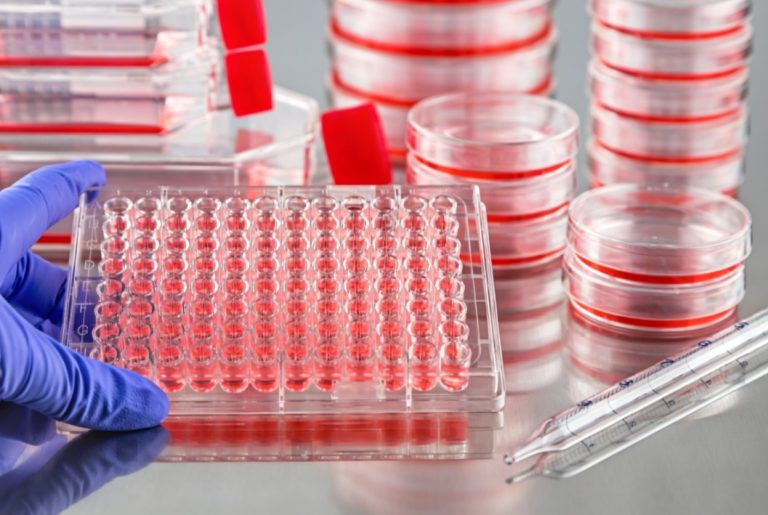
An agar Petri dish is a type of Petri dish that is used in microbiology to culture microorganisms like bacteria. Here are some key details about agar Petri dishes:
Agar is a gelatinous substance derived from algae that is used to solidify the growth medium in the Petri dish. It sets at room temperature.
A nutrient-rich material like broth is mixed into the agar before pouring it into the sterile Petri dish. This provides nutrients to support microbial growth.
Once solidified, the hardened agar forms a flat subsurface for microbes to be spread upon and incubated. It prevents microbes from sinking or floating away.
The purpose of using agar is to provide a solid growth medium that allows microbes such as bacteria and fungi to be easily isolated from each other as separate colonies on the surface.
As microbes multiply, they form visible distinct colonies within the pores of the agar, allowing them to be easily counted and identified.
Agar Petri dishes provide an optimal sterile environment for pure cultures of microorganisms to be grown, and isolated, and their properties studied by microbiologists and lab technicians.
So in summary, agar Petri dishes facilitate the culture and study of microbes by providing a nutrient-rich solid subsurface within a contained sterile environment that prevents floating or sinking of individual microbial colonies.